Iran War Ceasefire 2026: What Is Being Negotiated, Who Is Mediating, and What It Means for India
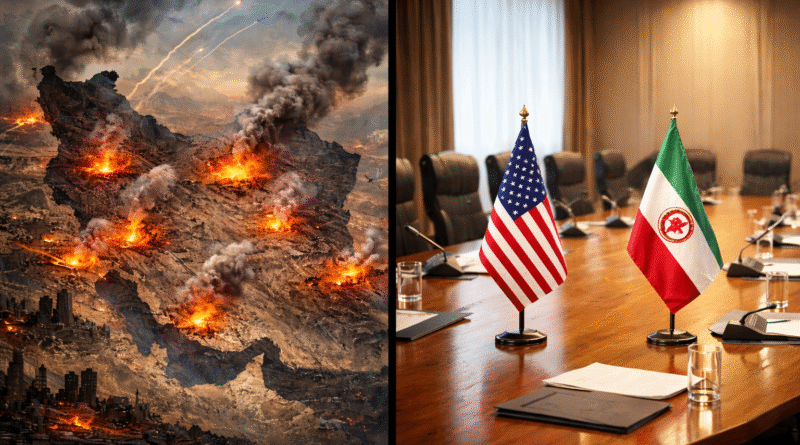
The Iran war ceasefire 2026 negotiations are at their most dangerous inflection point since the conflict began on February 28. On Monday April 6, Iran rejected a 45-day ceasefire proposal put forward by Pakistani, Egyptian, and Turkish mediators, demanding instead a permanent end to the war, sanctions relief, reconstruction compensation, and a regional settlement. President Trump, responding with characteristic escalation, set a deadline of Tuesday 8pm ET, warning he would bomb Iranian power plants and bridges if no deal was reached. “The entire country can be taken out in one night,” Trump told a White House press conference. “And that night might be tomorrow night.” This article breaks down what is being negotiated, who is mediating, what each side wants, and what an Iran war ceasefire 2026 would mean for India.
How the War Reached This Point
The conflict began on February 28, 2026, when the United States and Israel launched Operation Epic Fury a surprise coordinated strike on Iran targeting its nuclear infrastructure and military leadership. The first night killed Supreme Leader Ali Khamenei, his senior military commanders, and several civilian family members. Iran’s government declared 40 days of mourning and launched retaliatory strikes against Israel, US military bases in Bahrain, Jordan, Kuwait, Qatar and the UAE, and closed the Strait of Hormuz through which 20% of the world’s oil supply passes.
In the weeks that followed, the conflict expanded into a sustained aerial and missile war. Iran struck Gulf state energy infrastructure. Israel targeted Iran’s gas fields, including the South Pars complex Iran’s largest source of domestic energy. The US struck over 11,000 targets across Iran. Both sides suffered significant losses. As of early April 2026, more than 1,900 Iranians, 1,400 Lebanese, 23 Israelis, and 13 US service members have been killed.
The conflict has also produced a dramatic diplomatic realignment. Pakistan, Egypt, and Turkey emerged as the primary mediators. India which had positioned itself as a neutral party found itself absent from the mediation table, managing an LPG shortage and fuel crisis at home as a consequence of the Hormuz closure.
Iran War Ceasefire 2026: Where Every Party Stands
| Party | Current position |
| United States | Wants Hormuz reopened immediately. Offered 45-day ceasefire. Threatened to bomb power plants and bridges if no deal by Tuesday 8pm ET. Trump says Iran can be “taken out in one night.” |
| Iran | Rejected 45-day proposal. Demands permanent end to war + sanctions lifted + reconstruction compensation + regional hostilities ended. Hormuz stays shut until demands met. |
| Israel | Sceptical of any deal. Wants Iran to surrender all enriched uranium. Has approved target list of Iranian energy infrastructure. Awaiting US green light. |
| Pakistan | Primary back-channel mediator. Asim Munir in contact all night with US VP Vance and Iranian FM. Brokered latest ceasefire framework proposal. |
| Egypt & Turkey | Co-mediators alongside Pakistan. Sent joint ceasefire proposal to both sides. Iran conveyed its 10-point counter-response through them. |
| India | Called for ceasefire and dialogue. Not at the mediation table. Seeking emergency Russian LNG to offset Hormuz disruption. 90% surge in Russian crude purchases in March 2026. |
| Gulf states (UAE, Saudi) | Facing Iranian missile strikes. UAE intercepted 400+ ballistic missiles. Abu Dhabi oil refinery hit. Want any deal to address Iran’s nuclear programme. |
What the Iran War Ceasefire 2026 Negotiations Actually Involve
The ceasefire negotiations are a two-phase framework being coordinated primarily through Pakistan’s Army Chief Field Marshal Asim Munir, who was in contact throughout Sunday night and Monday with US Vice President JD Vance, special envoy Steve Witkoff, and Iranian Foreign Minister Abbas Araghchi.
Phase one of the proposed deal involves an immediate 45-day ceasefire during which both sides halt military action and preliminary talks begin. The ceasefire could be extended if more time is needed. The critical sticking points in phase one are two: first, whether Iran will take partial steps toward reopening the Strait of Hormuz Iran’s most valuable bargaining chip without a guarantee of a permanent deal. Second, what happens to Iran’s stockpile of highly enriched uranium, which the US and Israel consider the central security threat.
Phase two, if phase one succeeds would involve negotiating a permanent end to the war. Iran’s 10-point counter-proposal demands: lifting of all US and Western sanctions, full compensation for reconstruction of damaged infrastructure, a new legal regime for safe passage through the Strait of Hormuz (with Iran collecting transit fees), and an end to Israeli military operations in Lebanon and Gaza as part of any regional settlement. Iran has made clear it will not accept a repeat of the Gaza ceasefire model, where it believes a “pause” was used by the adversary to regroup and attack again.
The gap between the two sides is large. The US wants Hormuz open immediately as a confidence-building measure before any permanent deal. Iran insists Hormuz only reopens as part of a final agreement. The Iran war ceasefire 2026 talks are, in other words, not close to conclusion they are testing whether both sides can find enough common ground to pause the fighting.
Trump’s Deadline: What Happens If No Deal Is Reached
Trump set Tuesday 8pm ET (Wednesday 5:30am IST) as his final deadline for Iran to make a deal and reopen the Strait. His threats have escalated throughout the week from targeting military facilities to threatening bridges, power plants, and in one statement, “the entire country.” He told reporters at the White House: “Today will be the largest volume of strikes since day one. Tomorrow, even more than today.” Defence Secretary Pete Hegseth echoed the escalation: the operational plan for massive US-Israeli strikes on Iranian energy infrastructure is ready to execute.
Legal experts have noted that targeting civilian infrastructure power plants, water treatment, bridges would constitute war crimes under the Geneva Conventions. Trump, when asked if he was concerned about committing war crimes, said simply: “No.”
Israel is highly sceptical that the Iran war ceasefire 2026 negotiations will succeed. Two Israeli sources told CNN that Israel has approved an updated target list of Iranian energy sites. Netanyahu has conveyed to Trump that any ceasefire must require Iran to hand over all enriched uranium and commit to a complete halt of enrichment demands Iran has categorically rejected.
The realistic scenario if the deadline passes without a deal: a significant escalation of US strikes targeting Iranian civilian infrastructure, Iranian retaliation against Gulf state energy facilities, and a potentially catastrophic second wave of disruption to global oil markets. Brent crude was trading at $109 per barrel on Monday already 50% higher than when the war began.
What the Iran War Ceasefire 2026 Means for India
India’s stake in the Iran war ceasefire 2026 is direct and immediate. The Strait of Hormuz closure has already triggered India’s worst domestic energy shock in decades. 90% of India’s LPG imports pass through the strait. Brent crude at $109 per barrel is inflating India’s import bill by tens of billions of dollars. The EY Economy Watch report has warned India’s GDP growth could be eroded by approximately one percentage point if the conflict continues.
A ceasefire that reopens the Strait of Hormuz even partially, even for a limited period — would provide immediate relief to India’s energy situation. Indian refiners have been buying Russian crude at a 90% surge rate in March 2026 to compensate, but Russian supply cannot fully substitute for Gulf LNG and oil that moves through Hormuz.
Beyond energy, India has a diplomatic stake in the outcome. Pakistan’s central role as mediator has given Islamabad diplomatic capital that India has been unable to accumulate. An Iran war ceasefire 2026 brokered primarily through Pakistan, Egypt, and Turkey with India absent would be a further setback to India’s ambition to be an indispensable voice in West Asian affairs. India has called for ceasefire and dialogue, spoken with Gulf leaders and the Iranian foreign minister, but has not been part of the actual negotiation architecture.
If the ceasefire holds and post-conflict reconstruction begins, India may find opportunities in Iran’s rebuilding historically, India has had strong economic ties with Tehran. But the precondition is a permanent deal, not just a pause.
ThirdPol’s Take
The Iran war ceasefire 2026 negotiations are not really about 45 days or 10 clauses. They are about whether two sides that have been bombing each other for five weeks can find enough mutual interest in stopping to agree on the terms of a pause. Iran has a strong incentive, its economy is being destroyed, its civilian infrastructure is under threat, and the war has isolated it further internationally. The US has an incentive — oil at $109 per barrel is hurting American consumers ahead of midterm elections, and Trump wants a deal he can call a victory. The problem is Israel. Netanyahu wants Iran’s nuclear programme eliminated, not paused. Any deal that leaves Iran’s enriched uranium stockpile in place will face Israeli resistance. Trump will have to choose between a deal Iran can accept and a deal Israel will support. That choice is what will determine whether the Iran war ceasefire 2026 happens or the war escalates to a new level of destruction.
Pingback: Inside the Islamabad Talks: The Hidden Demands of Iran and the United States
Pingback: Iran War Timeline 2026: From Operation Epic Fury to Islamabad Ceasefire - ThirdPol
Pingback: Iran After War 2026: Islamabad Talks Collapse and What Comes Next