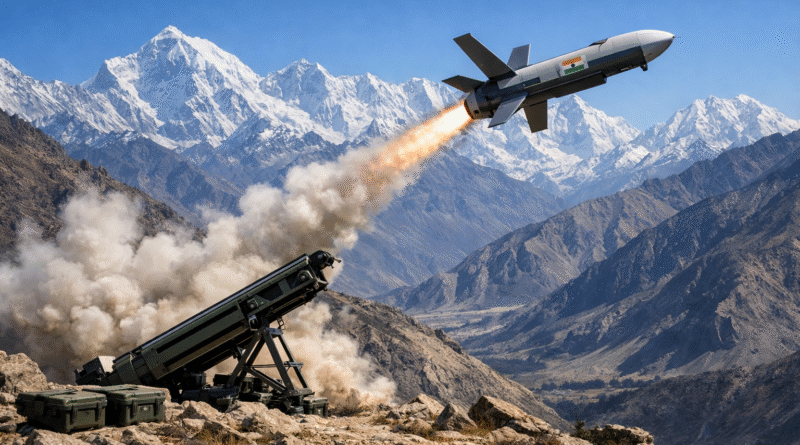
India Drone Manufacturing 2026: What Operation Sindoor Changed
India drone manufacturing 2026 is the story of a sector that went from ambition to combat validation in the span of four days in May 2025. When India launched Operation Sindoor on May 7, 2025 targeting nine terror infrastructure sites in Pakistan and POK it did so with a mixed inventory of drones and loitering munitions, several of which had been built by Indian startups that had never before seen their products used in real combat. Pakistan responded with over 400 drones during the operation. India’s indigenous counter-drone systems neutralised all of them. In the operational debrief that followed, India’s defence establishment drew three conclusions that are now reshaping the entire sector: that drones and loitering munitions are now as decisive as artillery; that dependence on imported systems is a strategic liability; and that the existing PLI scheme, at ₹120 crore, was nowhere near sufficient for what was now required. By July 2025, India had announced a $230 million expanded drone manufacturing incentive. By April 6, 2026, the Indian Army had published a 50-page Technology Roadmap for Unmanned Aerial Systems and Loitering Munitions the most detailed public statement of India’s drone requirements ever released.
Operation Sindoor: India’s First Real Drone War
The comparison to Ukraine is unavoidable and deliberate. The Russia-Ukraine conflict demonstrated that cheap, mass-produced drones could destroy expensive tanks and neutralise air defences in ways that rewrote battlefield economics overnight. India watched that war carefully, and when Operation Sindoor began, it deployed a drone architecture that reflected those lessons not perfectly, but enough to validate the direction.
The operation ran for 88 hours from May 7-10, 2025. Indian drones and loitering munitions struck targets including the LeT headquarters at Muridke, JeM’s Bahawalpur compound, and terror infrastructure in Muzaffarabad. Crucially, several drones deployed during Sindoor had not yet been formally inducted into the Indian Armed Forces — they were combat-evaluated in real conditions because no exercise could replicate live fire. This was a deliberate decision by the Army: use Sindoor to generate combat data, not just training data.
Pakistan’s drone response 400+ UAVs targeted at Indian military installations from Awantipura to Bhuj was neutralised without a single successful penetration of Indian airspace. India’s layered counter-drone architecture, anchored by the Akash missile system and supplemented by indigenous C-UAS platforms, performed beyond expectations. The IACS (Integrated Air Command and Control System) coordinated the response. India’s Defence Secretary Rajesh Kumar Singh described it directly: “Drones, loitering munitions, and kamikaze drones were used extensively.” It was the first full-scale drone-versus-drone engagement between two nuclear-armed states.
The Army’s April 2026 UAS Technology Roadmap: What India Wants to Build
On April 6, 2026 less than a year after Sindoor the Indian Army released its Technology Roadmap for Unmanned Aerial Systems and Loitering Munitions. The 50-page document, released by Deputy Chief of Army Staff Lieutenant General Rahul R. Singh, is the most specific public articulation of India’s drone requirements ever published. It details 30 types of UAS and loitering munitions across five categories, translating into approximately 80 distinct variants.
The document is simultaneously a procurement signal to industry, a research direction to academia, and a strategic statement about how India intends to fight its next war. Lt Gen Singh cautioned stakeholders not to share it with unauthorised persons a sign of how operationally sensitive the requirements are. Pakistan and China were specifically mentioned as potential targets of intelligence collection on the document’s contents.
The Policy Architecture: From PLI to $230 Million
The policy environment supporting india drone manufacturing 2026 has been built layer by layer since 2021, and Sindoor accelerated every layer.
| Policy / Scheme | Year | What it does | Impact |
| Import ban on drones | 2021 | Banned import of all but a small approved list of foreign drones. Forced domestic procurement. | Created guaranteed domestic market. Forced Indian startups to compete for military contracts. |
| Drone Rules 2021 | 2021 | Simplified drone certification, registration, and operation framework. DGCA-based digital clearances. | 38,500+ registered drones, 39,890 certified pilots by Feb 2026. |
| PLI Scheme (Drones) | Sep 2021 | Original ₹120 crore PLI for drone and component manufacturing. Limited takeup due to funding gaps for startups. | Catalysed early ecosystem. Insufficient for post-Sindoor ambitions. |
| Drone Shakti Mission | 2022 | Government-wide drone use across ministries — agriculture, land survey, disaster management. | Created civilian demand that sustains manufacturing even outside defence contracts. |
| $230M New PLI Package | Post-Sindoor 2025 | New ₹1,900+ crore incentive package for drones, components, software, counter-drone systems. Replaces ₹120cr scheme. | More comprehensive. Ministry of Defence co-leads. Covers entire value chain not just hardware. |
| GST reduction to 5% | Sep 2025 | GST on drones reduced from 18%/28% to uniform 5%. | Reduces cost burden on domestic manufacturers and commercial operators. |
| Army UAS Technology Roadmap | Apr 6, 2026 | 50-page blueprint detailing 30 drone types across 5 categories — ~80 variants total. Published by Indian Army. | Gives industry clear 10-year demand signal. Eliminates procurement uncertainty for startups. |
| Aatmanirbhar Bharat (Defence) | Ongoing | Positive indigenisation list. No Chinese components in defence drone supply chains. | ₹5,000 crore in domestic drone orders placed in 2026. Chinese components explicitly excluded. |
The Numbers: Scale of the 2026 Ecosystem
As of early 2026, India’s drone ecosystem by the numbers tells a story of genuine acceleration. The Drone Federation of India represents over 550 companies and 5,500 drone pilots. Registered drones stand at 38,500+, certified remote pilots at 39,890, across 244 approved training organisations. Over 100,000 drone operators have been trained for military use, with 19 specialised training hubs to be operational by late 2026.
The market outlook is significant. India’s drone market is projected to reach $11 billion by 2030 representing over 12% of global share, up from under 1% in 2020. The Nifty India Defence Index surged approximately 40% in the five months after Operation Sindoor was initiated, driven by investor confidence in defence manufacturing. Market capitalisation of 18 listed Indian defence companies reached ₹11 lakh crore in the days after May 7, 2025. Defence-focused drone startups, which previously struggled to raise VC funding because of long government tendering cycles, are now actively sought by investors who watched Sindoor demonstrate real-world product validation.
One specific data point captures the shift: Zuppa Geo Navigation, maker of India’s first indigenous micro-armed drone, saw its order pipeline jump 10x in May 2025 alone. “Today, our order pipeline of around ₹14 crore has seen close to a 10x jump from pre-Sindoor days,” said Zuppa’s CEO. That order pipeline jump, multiplied across dozens of drone startups, is what $230 million in new PLI funding is designed to sustain and scale.
The Gaps: What India’s Drone Industry Still Cannot Do
Operation Sindoor validated India’s direction but also exposed the gaps that remain in india drone manufacturing 2026. Three are significant.
First, component dependency. The Aatmanirbhar Bharat push explicitly excludes Chinese components from defence drone supply chains a correct decision for security reasons but the honest consequence is that critical components (certain motors, ESCs, GPS modules, imaging sensors) are still imported from European or American suppliers. “PLIs won’t cut it,” as one analyst on the defence forum community noted the component supply chain remains a vulnerability that a single sanctions decision or supply chain disruption can expose. India needs indigenous component manufacturing at the MEMS, sensor, and propulsion level, not just at the final assembly level.
Second, long-range high-endurance capability. India currently lacks a domestically produced HALE (High Altitude Long Endurance) drone comparable to the US Predator/Reaper class or Israel’s Heron TP. The DRDO’s TAPAS (Rustom-2) is a MALE system, not HALE. The Army’s Technology Roadmap explicitly lists HALE as a requirement meaning it does not yet have one indigenously. India currently leases US-made MQ-9B Sea Guardian drones from General Atomics for maritime surveillance. Building a domestic HALE capability is a 5-7 year programme at minimum.
Third, swarm technology at scale. The roadmap calls for swarm drones capable of simultaneous surveillance and strike. The concept is proven globally Ukraine has used drone swarms effectively against Russian positions but India’s swarm capability is at the R&D stage, not deployment scale. The iDEX (innovations for Defence Excellence) programme has funded swarm projects but none have yet achieved the autonomous coordination required for battlefield swarms.
What US Audiences Need to Understand About India’s Drone Rise
American defence industry watchers are beginning to pay serious attention to India’s drone sector for two reasons that have nothing to do with South Asian geopolitics.
First, India is becoming an export market for US drone technology. The pending procurement of 31 MQ-9B Predator drones from General Atomics — a $3 billion deal — represents one of the largest US drone exports in history. If India’s drone doctrine continues to evolve toward HALE-class systems, the US supplier relationship deepens significantly. iCET (the initiative on Critical and Emerging Technology) specifically includes UAS as a cooperation area.
Second, India’s insistence on no Chinese components in its defence drone supply chain creates a structural opening for US and allied component suppliers. The explicit Aatmanirbhar Bharat rule no Chinese parts in defence systems means that every Indian drone manufacturer needs non-Chinese alternatives for motors, sensors, and electronics. American, Japanese, and European component suppliers are actively targeting this opening. The $230 million PLI scheme creates guaranteed demand that makes investment in India’s drone component supply chain commercially viable.
ThirdPol’s Take
India drone manufacturing 2026 is at the same inflection point that India’s space programme was in 2019, before IN-SPACe unlocked the private sector. The Sindoor validation has done for drone startups what Chandrayaan-3 did for space: it created an undeniable proof of concept, generated investor confidence, and gave the government political cover to scale public investment. The Army UAS Roadmap published April 6 is the equivalent of the Space Policy 2023 for the drone sector a clear demand signal that transforms the investment calculus for founders, VCs, and international partners. The three gaps component dependency, HALE capability, swarm at scale are real but not structurally fatal. India solved analogous gaps in its missile programme (Agni series), its nuclear submarine programme (Arihant), and its space launch vehicles (GSLV). The drone sector will follow the same trajectory: 5-10 years of gap-closing, then a capability that is genuinely indigenous and genuinely competitive. The question is whether the PLI funding, the iDEX pipeline, and the Army procurement tempo can stay aligned long enough for that decade of investment to compound. If they can and the April 2026 Roadmap suggests institutional commitment is serious india drone manufacturing 2026 may look, from 2035, the way Indian IT looked in 1998: the beginning of a permanent global position.
By Amit Mangal | ThirdPol | April, 2026