India Russia Relations 2026: Oil, Arms, and the US Pressure That Is Pulling Them Apart
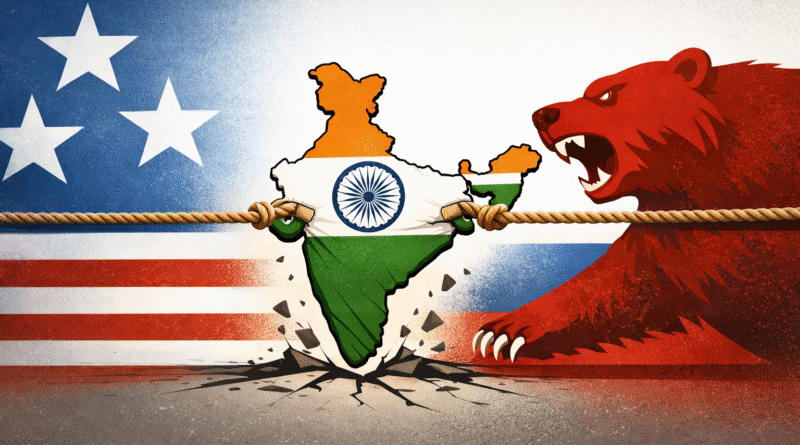
When Vladimir Putin landed in New Delhi in December 2025, his first visit to India since Russia’s invasion of Ukraine Modi met him at the airport himself, gave him a bear hug, and called the partnership a “guiding star.” India Russia relations 2026 are under simultaneous pressure from every direction: the United States has made cutting Russian oil imports a condition of India’s trade deal, the Iran war has forced India to surge Russian crude purchases back up by 90% in March 2026, and Russia is now offering expanded LNG supplies as a direct counter to the US pressure. The relationship that once defined India’s strategic autonomy is now the central battlefield on which India’s foreign policy choices are being fought. Understanding what India actually wants from Russia and how much of it survives the US-India reset is one of the most important questions in Indian foreign policy right now.
India Russia Relations 2026: The Numbers That Matter
| Dimension | Key facts |
| India-Russia bilateral trade | $13 billion (2021) → $68 billion (2024-25). Target: $100 billion by 2030. |
| Russian oil share in India imports | 33% of crude imports (2025 peak) → cut to 21% by Feb 2026 under US pressure → surged 90% in March 2026 due to Iran war. |
| Russian arms dependency | Russia supplied ~45-50% of India’s arms imports over decades. India now diversifying to France, US, Israel. |
| S-400 deal | $5 billion deal signed 2018. 3 of 5 squadrons delivered. Proved effective in Operation Sindoor (May 2025). |
| India-Russia oil debt | Russia owed India 2 additional S-400 squadrons from 2018 contract delayed due to Ukraine war supply chain issues. |
| US trade deal condition | India committed to buying $500 billion in US goods over 5 years and reducing Russian oil imports as part of Feb 2026 trade deal. |
| Russian oil March 2026 | Indian refiners secured 60 million barrels of Russian crude for April 2026, a 90% surge vs February, driven by Iran war disruption. |
| Kudankulam Nuclear Plant | Russian-built. 6 units planned. Units 1 and 2 operational. Russia key partner for India’s civil nuclear programme. |
A 75-Year Partnership Under Its Greatest Pressure
India and Russia through the Soviet era have shared one of the most durable strategic partnerships in post-independence Indian history. It began in the late 1940s, deepened with the Indo-Soviet Treaty of Peace, Friendship and Cooperation in 1971, and survived the collapse of the Soviet Union, three India-Pakistan wars, and the post-Cold War expansion of US-India ties. Russia supplied the aircraft carriers, MiG jets, submarines, and T-90 tanks that built India’s military capability over six decades. It built the Kudankulam Nuclear Power Plant. It has been India’s single largest arms supplier for most of that period.
What is new in India Russia relations 2026 is not hostility Modi still calls the relationship “special and privileged” and Putin still calls Modi a “dear friend.” What is new is external pressure of an intensity neither side has faced before. The Trump administration has been explicit: India’s purchase of Russian crude oil is unacceptable, and Washington is willing to use tariffs, sanctions, and trade deal conditions to enforce that position. The February 2026 India-US trade deal which cut India’s tariff burden from 50% to 18% came with a demand that India reduce Russian oil imports. India signed. Then the Iran war disrupted Gulf oil, and India went straight back to Russian crude.
The Oil Roller Coaster in India Russia Relations 2026
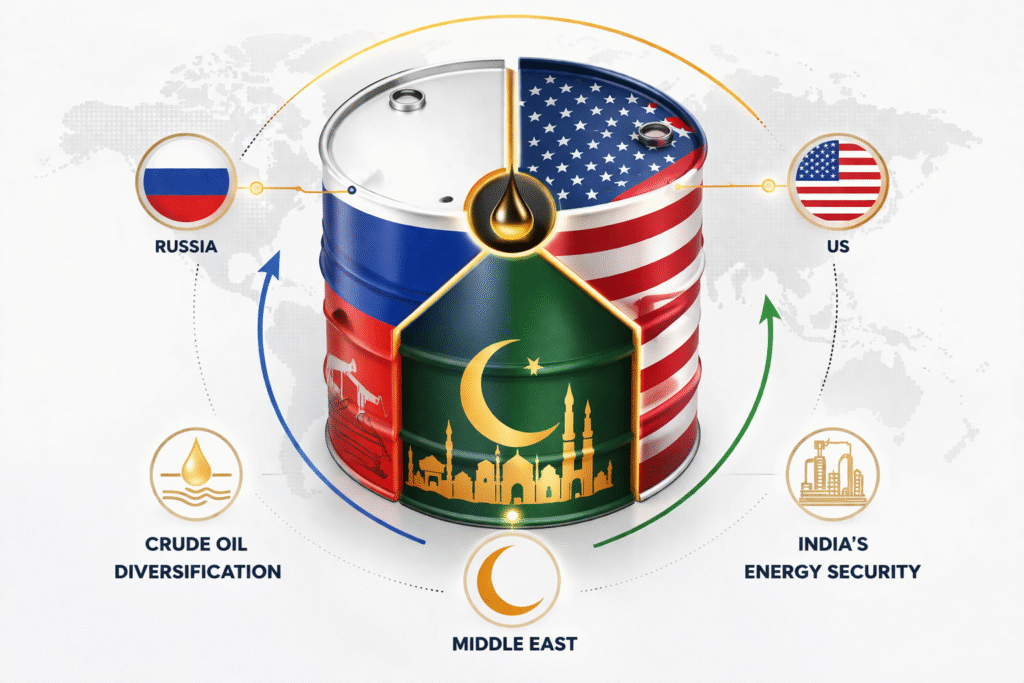
The story of oil in India Russia relations 2026 is a story of competing pressures, short-term responses, and an energy dependency that India cannot resolve quickly regardless of diplomatic commitments.
After Russia invaded Ukraine in 2022, India dramatically increased its purchase of discounted Russian crude going from negligible volumes to becoming Russia’s largest seaborne oil customer. By 2025, Russian oil accounted for 33% of India’s total crude imports, at an average of 1.7 million barrels per day. This saved India billions in energy costs and helped stabilise global crude markets by keeping Russian supply flowing.
Under US pressure, India began reducing Russian oil purchases. By February 2026 — when the India-US trade deal was signed — Indian imports of Russian crude had fallen to 21% of total imports, a 39% cut. Russian oil imports hit a 38-month low in December 2025. The US trade deal explicitly demanded India stop buying Russian oil in exchange for tariff relief.
Then the Iran war began. Iran closed the Strait of Hormuz. India’s Gulf oil supply was disrupted. Indian refiners, facing an energy emergency, immediately turned back to Russia. By March 2026, crude imports from Russia had surged by nearly 90% compared to February. Indian refiners secured 60 million barrels of Russian crude for April delivery. Russia simultaneously offered expanded LNG supplies — including restarting direct LNG imports from Russia for the first time since 2022. The India Russia relations 2026 oil dynamic is, in short, determined more by global energy crises than by diplomatic commitments to Washington.
India Russia Relations 2026: The Arms Dependency Problem
Oil is the visible pressure point. Arms is the structural one. Russia has been India’s dominant arms supplier for decades supplying aircraft carriers, submarines, fighter jets, battle tanks, and now the S-400 air defence system. Roughly 45-50% of India’s arms imports have historically come from Russia. This dependency is not a strategic choice India makes freely it is a legacy of the Cold War era when the West refused to sell India advanced military technology and the Soviet Union stepped in.
India Russia relations 2026 in the defence sector are complicated by several overlapping pressures. First, Russia’s own defence industry is under severe strain from the Ukraine war. Spare parts, components, and new deliveries have slowed. Russia still owes India two additional S-400 squadrons from the 2018 contract — delayed because Russia is using similar systems in Ukraine. Second, the US has repeatedly threatened India with CAATSA (Countering America’s Adversaries Through Sanctions Act) sanctions for purchasing the S-400, though Washington has so far chosen not to impose them, recognising the strategic cost of sanctioning a major Indo-Pacific partner.
The S-400’s performance during Operation Sindoor in May 2025 actually strengthened Russia’s case for continued defence cooperation. The system performed effectively in intercepting Pakistani drones and missiles. Indian military officials praised it publicly. That vindication has given New Delhi reason to resist US pressure on the S-400 issue, even as it reduces oil imports.
India’s response to the arms dependency has been gradual diversification buying Rafale jets from France, Apache helicopters from the US, defence deals with Israel, and pushing its own domestic defence production through Make in India. The December 2025 India-Russia summit also agreed to shift towards joint production in India of spare parts and components for Russian weapons a model that reduces India’s pure import dependency while keeping Russian technology flowing.
What Russia Wants From India and Why India Still Matters to Moscow
Russia’s interest in India Russia relations 2026 is more urgent than it has been in decades. Facing Western sanctions, economic isolation, and a drawn-out war in Ukraine, Russia needs large, reliable trading partners who will not be bullied into cutting ties by Washington. India fits this profile perfectly.
Russia wants several things from India. First, it wants India to keep buying energy oil, gas, and eventually LNG to sustain export revenues under the sanctions regime. India’s 90% surge in Russian crude purchases in March 2026 is exactly what Moscow needs. Second, Russia wants bilateral trade to reach $100 billion by 2030 up from $68 billion in 2024-25 and needs India to increase its exports to Russia to rebalance a trade flow that is currently heavily skewed toward Russian exports. Third, Russia values India’s diplomatic cover, India’s consistent refusal to condemn Russia at the UN, its abstentions on key votes, and Modi’s public statements calling for dialogue and peace rather than Russian withdrawal.
Russia also values the relationship with India as a counterweight to its growing dependence on China. Moscow’s relationship with Beijing has deepened dramatically since 2022, but Russia is uncomfortable with excessive Chinese dependence Beijing drives a hard bargain, and Russia has limited leverage as a junior partner. India, as a counterbalancing partner, gives Moscow diplomatic and economic room that China does not provide.
Is India Russia Relations 2026 in Managed Decline?
Chatham House has described the trajectory of India Russia relations 2026 as “managed decline.” The direction of travel, they argue, is toward a less intense relationship driven by India’s diversification of arms suppliers, the US pressure on oil, and Russia’s own reduced capacity to deliver on defence commitments due to the Ukraine war.
This assessment is partially right but misses what the Iran war has revealed. India cannot afford to decouple from Russian energy on a timeline set by Washington. Its 87% crude import dependency means energy security always overrides diplomatic commitment. The moment Gulf oil is disrupted, Russia becomes irreplaceable. India Russia relations 2026 are therefore not in decline so much as in redefinition moving from a relationship anchored primarily in arms and ideology to one anchored primarily in energy and pragmatic economic need.
The arms side is genuinely declining. India will buy fewer Russian weapons over the next decade, not because of US pressure but because Russia’s defence industry is weakened, deliveries are delayed, and better alternatives exist from France, the US, and Israel. The energy side, however, is more durable than Washington would like and the Iran war has demonstrated why.
ThirdPol’s Take
India Russia relations 2026 are a useful mirror for India’s broader foreign policy challenge. India wants strategic autonomy. Washington wants India to choose sides. Moscow wants India to keep buying. The result is a relationship that serves India’s interests precisely because it refuses to resolve the contradictions. India buys Russian oil when it needs to, regardless of what it commits to in trade deals. It maintains Russian arms systems that Washington dislikes. It refuses to condemn Russia at the UN. And it simultaneously deepens trade and technology ties with the United States. This is not incoherence. It is India’s version of strategic autonomy in practice — using every relationship as leverage and committing to none of them absolutely. Whether the United States will continue to tolerate this approach, or whether India will eventually be forced to make a definitive choice, is the question that will define Indian foreign policy for the rest of the decade.
By Amit Mangal | ThirdPol | April 2026
Pingback: US vs Russia: The Battle for India’s Military — Who Is Winning?