Iran After War 2026: New Supreme Leader, Islamabad Talks Collapse, and What Comes Next
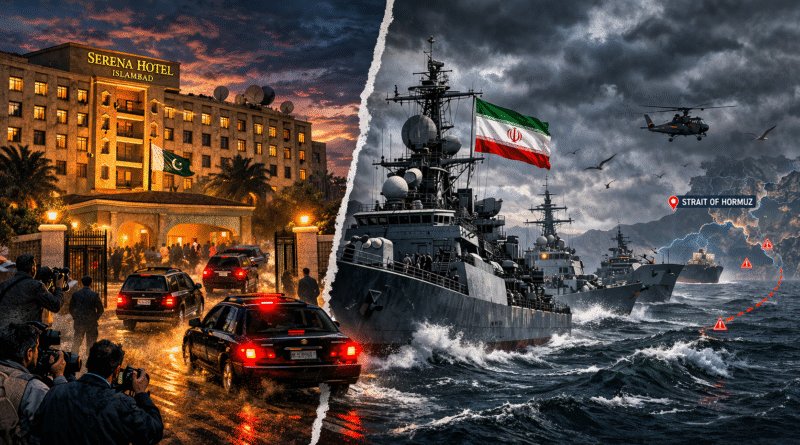
The iran after war 2026 question has just been answered and the answer is: there may not be an “after” yet. The two-week ceasefire that Pakistan brokered on April 8 expired without a follow-on deal. The Islamabad talks between US Vice President JD Vance and Iranian Foreign Minister Abbas Araghchi lasted less than one day before collapsing on April 12-13. Araghchi described the outcome on X: Iran had participated “in good faith,” discussions had progressed to “the brink of a potential memorandum of understanding,” but “when just inches away from an Islamabad MoU, we encountered maximalism, shifting goalposts, and blockade.” Trump, for his part, announced a US Navy blockade of the Strait of Hormuz. The IRGC warned that any military vessel approaching Hormuz would be “dealt with harshly.” The world is back at the edge it stood on in early April. Understanding what iran after war 2026 actually looks like requires understanding three things simultaneously: who is now leading Iran, why the talks failed, and what the gap between the two sides actually is.
Iran After War 2026: The New Supreme Leader
The assassination of Ali Khamenei on February 28 triggered only the second succession in the Islamic Republic’s 47-year history. The constitutional process is clear: Article 111 requires the 88-member Assembly of Experts to select a new supreme leader. In the interim, a three-person council assumes the leader’s powers — in this case President Masoud Pezeshkian, Chief Justice Gholam-Hossein Mohseni-Eje’i, and senior cleric Alireza Arafi.
What actually happened was messier. According to Iran International, the IRGC bypassed the formal process on February 28 and tried to immediately install a successor through pressure on Assembly members. The formal election was held March 3-8, 2026. On March 9, Mojtaba Khamenei the 55-year-old son of the assassinated supreme leader was announced as Iran’s third supreme leader. Ali Khamenei had reportedly opposed his son succeeding him, concerned about the dynastic optics of a son inheriting the revolutionary leadership. The IRGC, which pressured the Assembly to elect Mojtaba, had a different calculation: they needed someone they could control, and someone who owed his position to them.
| Factor | Detail | Implication for negotiations |
| Age | ~55 years old. Relatively young by Iranian clerical standards. | Unlike his father (85 at death), Mojtaba could lead Iran for 30+ years. Long-term strategic horizon. |
| Legitimacy | IRGC pressured Assembly of Experts to elect him. Constitutional process technically followed but under duress. Father had opposed dynastic succession. | Weak religious legitimacy. Dependent on IRGC for power. IRGC views war continuation as institution-preserving. |
| First public statement | Called for continued military resistance. Endorsed Hormuz as leverage. Said Iran studying “other fronts where enemy is vulnerable.” Endorsed Axis of Resistance. | Hardline opening position. Cannot appear to capitulate immediately after election — would undermine legitimacy. |
| Visibility | No video or audio released as of mid-April 2026. First message read by state TV anchor. Reports of possible injury in original February 28 strikes on father’s compound. | Health uncertainty is itself a factor. If incapacitated, IRGC fills the vacuum. |
| Relationship with IRGC | Long-documented influence over IRGC through father’s machinery. Basij paramilitary also linked to him. | IRGC is his institutional base. IRGC benefits from war continuation — war justifies its budget and power. |
The Islamabad Talks: Why They Failed
The Islamabad talks were always going to be difficult. The analysis ThirdPol published when they began that the US and Iran entered with structurally incompatible public positions proved correct. What made the collapse particularly significant is the timing: Iran’s FM said they were “inches away” from a memorandum of understanding. That means the gap was real but closable at the moment Vance chose to escalate rather than close it.
Pakistani FM Ishaq Dar described the talks as “intense and constructive” and expressed surprise at the sudden breakdown. Pakistani officials had believed the two sides were converging on a general framework when Vance cut the talks short and announced the Hormuz blockade. The Pakistani hosts, who had invested enormous diplomatic capital in hosting the talks, were left holding a failure they did not expect.
What happened, according to CNN’s reporting of White House officials, is that the US presented Iran with a set of “nonnegotiable red lines” that represented a maximalist position on the nuclear question specifically dismantling all enrichment facilities and retrieving 400kg of highly enriched uranium buried underground. Iran’s negotiating team, which had come prepared to accept limitations on enrichment but not full dismantlement, could not sign. Araghchi’s “shifting goalposts” characterisation suggests the US moved its position between the pre-talks framework discussions and the Serena Hotel table.
The Gap: Why the US and Iran Cannot Close It
| Issue | US red line | Iran position | Gap assessment |
| Nuclear enrichment | Dismantle all enrichment facilities. Retrieve 400kg of highly enriched uranium buried underground. | Right to civilian nuclear programme. Will not surrender enriched uranium stockpile. | Structurally irreconcilable. Iran says enrichment is sovereign right; US demands zero. |
| Hormuz control | Full unconditional reopening. No Iranian oversight. No transit fees. | Iranian military coordination of transit. Hormuz as leverage. | Iran used Hormuz blockade threat as ceasefire bargaining chip. Not giving it up easily. |
| US military presence | US bases in Gulf remain. Non-negotiable. | Withdrawal of all US combat forces from Middle East bases. | US will not accept. Iran knows this but must demand it for domestic audience. |
| Proxy groups (Hamas, Hezbollah, Houthis) | Iran ends all funding and support for regional proxy groups. | Axis of Resistance is core Iranian foreign policy — non-negotiable. | New Supreme Leader Mojtaba Khamenei explicitly endorsed Axis of Resistance in first statement. |
| Reconstruction payment | US: No reconstruction compensation. | Iran: Full compensation for war damages. | US has zero domestic political support for paying Iran compensation. |
| Legal framework | Bilateral executive agreement. | UN Security Council binding resolution. | US cannot accept UNSC framework without China/Russia involvement. |
What Happens Now: Three Scenarios
The breakdown of the Islamabad talks and Trump’s Hormuz blockade announcement creates three plausible scenarios for iran after war 2026, none of which is clearly dominant.
Scenario 1 — Back to war. The IRGC, whose institutional interests are served by war continuation, uses the ceasefire collapse as justification to resume missile and drone operations. Iran mines or physically blocks Hormuz. The US Navy blockade triggers an encounter at sea. A miscalculation a fired warning shot that hits a vessel, a drone strike that kills American sailors escalates rapidly. Oil prices return to $109+. India faces a second energy emergency.
Scenario 2 — Extended standoff. Neither side wants full war resumption the ceasefire was agreed because both were exhausted. The US blockade and Iran’s Hormuz threat coexist in a tense equilibrium where neither fires first but neither backs down publicly. Pakistan and China work to restore dialogue. A second round of talks in a different format — perhaps back-channel Omani mediation rather than direct talks begins within weeks. This was, essentially, the situation between late March and early April 2026 before the Islamabad talks, and it can recur.
Scenario 3 — A narrower deal. The maximalist US red lines that collapsed the Islamabad talks may not reflect Trump’s final position they may reflect Elbridge Colby’s Pentagon position, which is more hawkish than Witkoff’s State Department position. If Trump decides he wants a deal he can announce as a personal victory, he may override the maximalists and accept a more limited framework: Hormuz opens, Iran freezes enrichment at current levels (without dismantling facilities), sanctions are partially lifted, and the harder questions (proxy groups, reconstruction) are deferred to a later comprehensive deal. This is the scenario Iran’s Araghchi was signalling when he said they were “inches from a MoU.”
What Iran After War 2026 Means for India
India’s stakes in the iran after war 2026 scenario are existential in energy terms and significant in strategic terms.
If the war resumes Scenario 1 India faces a second Hormuz closure, a second LPG crisis affecting 330 million households, and a second phase of emergency oil procurement at elevated prices. The February trade deal with Trump required India to stop buying cheap Russian oil. India is now paying more for energy from alternative suppliers. A second Hormuz closure would compound that cost burden severely.
If the extended standoff continues Scenario 2 India’s energy situation stabilises at elevated but manageable costs. Chabahar Port, currently suspended, cannot resume operations while US secondary sanctions risk remains high. The INSTC corridor, which India needs for Russia and Central Asia trade, remains stalled. India’s $500 million Chabahar commitment sits idle.
If a narrow deal emerges Scenario 3 India benefits most. Hormuz reopens permanently, oil prices normalise, Chabahar operations can resume with US exemptions intact, and the INSTC becomes operational. India was not at the Islamabad table. It is not in any of the active mediation formats. But its interests are served most clearly by the narrower deal scenario and it should be making that case quietly to Pakistan, which remains the only active mediator, and to the US, in bilateral channels.
ThirdPol’s Take
Iran after war 2026 may not be after war at all. The Islamabad talks collapse is serious but not necessarily fatal to diplomacy. Araghchi’s “inches from a MoU” statement is a signal, not a door-slam he is saying the deal was achievable and Iran is prepared to return to the table. Trump’s Hormuz blockade announcement reads more like a pressure tactic than a commitment to action he used similar threats in March and did not follow through. The most likely path from here is a few days of maximum pressure, followed by quiet back-channel restoration through Pakistan or Oman, followed by a second round of talks with a narrower agenda. The IRGC will push for harder positions from Mojtaba Khamenei. Whether the new Supreme Leader who owes his position to the IRGC has the authority or inclination to override them is the central uncertainty in the iran after war 2026 equation. Mojtaba Khamenei has barely been visible since his election. No video, no audio. Reports of possible injury. A supreme leader who cannot be seen governing is a supreme leader who cannot effectively negotiate. That is the wild card that makes iran after war 2026 genuinely unpredictable.