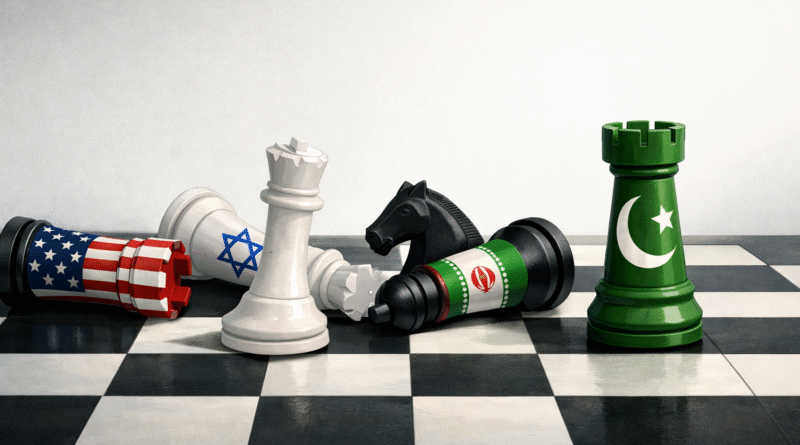
Who Won the Iran War? The Ceasefire That Left Everyone Empty-Handed
Who won the Iran war? It is the question every analyst, diplomat, and kitchen table in the world is asking on April 8, 2026, as the guns at least temporarily fall silent after 38 days of conflict. The two-week ceasefire brokered by Pakistan and announced by Trump hours before his own deadline expired has halted the fighting. The Strait of Hormuz will reopen. Islamabad talks begin on April 10. But before the world exhales, it is worth examining what actually happened who achieved what they wanted, who suffered, and who emerged from this war in a position they did not hold before it started. The answer is more complicated than any single victor narrative allows.
What the Ceasefire Actually Says
The ceasefire was announced by Trump on Truth Social less than two hours before his self-imposed 8pm ET deadline, citing conversations with Pakistani PM Shehbaz Sharif and Field Marshal Asim Munir. Trump said he was suspending bombing “for a period of two weeks” on the condition that Iran reopens the Strait of Hormuz completely, immediately, and safely.
Iran’s Supreme National Security Council confirmed acceptance but made two things explicit: “This does not signify the termination of the war” and “our hands remain upon the trigger.” Iran’s foreign minister said ships would be allowed safe passage through the Strait but via coordination with Iran’s armed forces, effectively giving Tehran a role in managing Hormuz traffic. Iran also proposed a $2 million fee for every ship passing through, which was not accepted by the US but signals the kind of leverage Tehran intends to maintain.
Trump, in his Truth Social post, said Iran’s 10-point peace plan was “a workable basis on which to negotiate” and that “almost all of the various points of past contention have been agreed to.” This was a striking concession Iran’s 10-point plan had included full sanctions relief, reconstruction compensation, and regional settlement clauses that the US had previously dismissed as non-starters.
Critically, Britannica reported that China nudged Iran to accept the ceasefire at the last minute. This detail, largely unreported in Western coverage, matters significantly for understanding what the ceasefire actually represents.
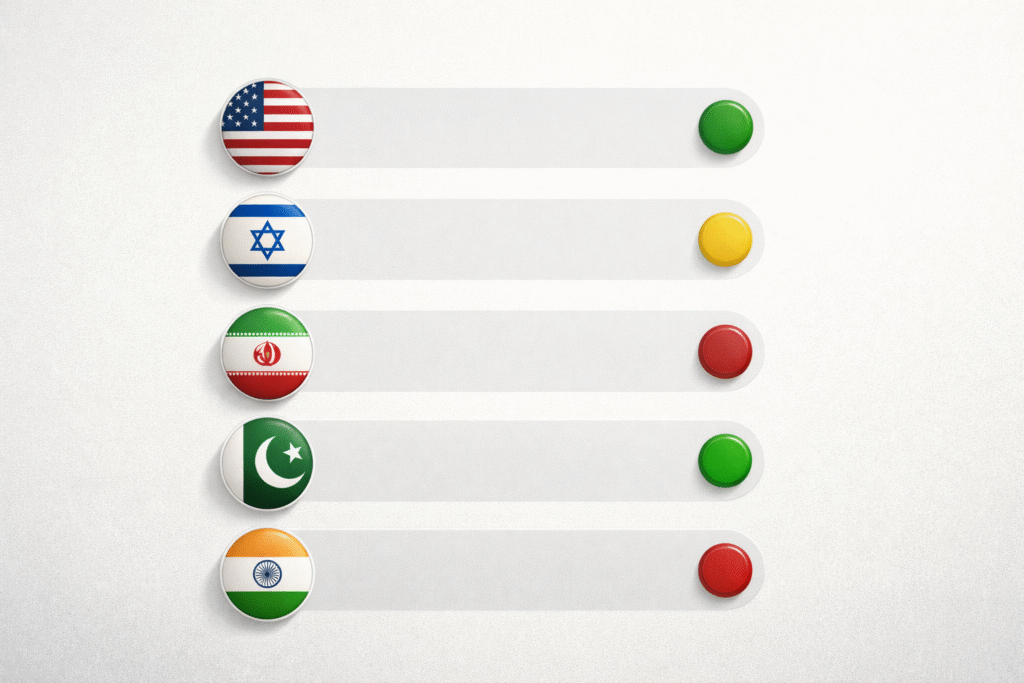
Who Won the Iran War? The Full Scorecard
| Party | What happened to them | Verdict |
| Israel | Achieved core objectives: killed Khamenei and top IRGC commanders, severely degraded Iran’s nuclear programme and missile capabilities. Retains ability to strike Iran again. | Won (military objectives) |
| United States | Degraded Iran militarily but did not achieve regime change. Accepted Iran’s 10-point framework — a significant diplomatic concession. Global credibility cost from war crime threats. | Mixed — partial win |
| Iran | Regime survived. Retained Hormuz as leverage. Forced the US to adopt its 10-point framework as a negotiating basis. But paid enormous human, economic, and military cost. | Survived not a victory |
| Pakistan | Biggest diplomatic winner. Mediated the ceasefire. Islamabad talks confirmed. Asim Munir’s credibility with Trump and Tehran cemented. Pakistan broke India’s isolation strategy. | Clear winner (diplomatic) |
| India | Energy crisis, absent from mediation, Pakistan gained at India’s expense. Hormuz reopening brings immediate relief but structural problems remain. | Lost diplomatically |
| Gulf States | Suffered significant infrastructure damage, displacement, economic disruption. UAE, Saudi Arabia, Bahrain all hit. War cost estimated over $120 billion to Arab countries. | Significant losers |
| Global economy | Oil at $109/barrel before ceasefire. Estimated world’s largest supply disruption since 1970s. S&P 500 fell then rallied on ceasefire news. Damage already done. | Significant loser |
| China | Stayed out, nudged Iran to accept ceasefire at the last minute, protected its oil and trade interests. Strengthened position as responsible power vs US belligerence. | Quiet winner |
Israel: The Military Winner That Got What It Came For
By the hardest measure of military success did you achieve your stated objectives Israel won the Iran war. Before February 28, Israel’s core concern was Iran’s nuclear programme and its missile capability. Both have been severely degraded. US and Israeli strikes destroyed or heavily damaged Iran’s main nuclear sites, killed the country’s top military commanders, assassinated the Supreme Leader, and dismantled large portions of Iran’s air defence network. CSIS’s analysis concludes that Iran can rebuild its missile and nuclear programmes it has the human capital but this will take years and significant money that Iran does not currently have.
Most importantly for Israel, Iran now lacks the air defence capability to prevent future strikes. Israel has essentially established a right to bomb Iran whenever it judges it necessary. Netanyahu called the ceasefire a “historic victory.” Whether that framing survives scrutiny over the next two weeks depends on whether Iran actually surrenders its enriched uranium stockpile which remains the central Israeli demand and the most likely point of failure in the Islamabad talks.
The US: A Military Win, a Diplomatic Retreat
The United States achieved significant military outcomes Iran’s navy was largely destroyed in the Gulf of Oman, its missile programme was set back, its nuclear sites were hit, and its regional influence was weakened. The Pentagon struck over 11,000 targets in 38 days. By raw military metrics, the US performed well.
The diplomatic picture is murkier. Who won the Iran war in the diplomatic arena for the US? Not decisively. Trump accepted Iran’s 10-point framework as a “workable basis for negotiation” a framework that includes full sanctions relief and reconstruction compensation. These were conditions that would have been unthinkable six weeks ago. Iran’s state media framed the ceasefire as a victory, and not without basis.
The manner in which Trump escalated threatening to bomb civilian power plants, bridges, and water treatment facilities, and dismissing war crime concerns with a casual “no” damaged US credibility and international standing. The Arab states who bore the physical cost of Iranian retaliation are deeply uncomfortable with how Washington conducted this war. Saudi Arabia and the UAE suffered infrastructure strikes, displacement, and economic disruption without being consulted meaningfully on de-escalation.
Iran: Battered, Surviving, and Not Finished
The Iranian regime survived. That is the single most important fact for Tehran. Iran’s leadership had been predicting for years that a US-Israeli strike would trigger popular revolt instead, Iranian civilians formed human chains around power plants to defend national infrastructure. The regime’s ability to mobilise nationalist sentiment even among people who had been protesting against it months earlier demonstrated a resilience that surprised both Washington and Tel Aviv.
Iran also won a significant diplomatic point: its 10-point framework was adopted as the basis for negotiations. Sanctions relief, reconstruction compensation, and a role in managing Hormuz traffic these were Iran’s demands, and the ceasefire at minimum keeps them on the table. Iran also successfully used the Hormuz closure as leverage throughout maintaining it as a bargaining chip until the very last moment.
The costs, however, were catastrophic. More than 1,900 Iranians killed. Critical infrastructure destroyed. The nuclear programme severely set back. The economy, already in free fall, now faces the burden of reconstruction. The new Supreme Leader, Mojtaba Khamenei, has inherited a country that is dramatically weaker militarily than it was six weeks ago. Who won the Iran war from Tehran’s perspective depends entirely on whether the Islamabad talks produce a deal that compensates for what was lost. If they do not, the ceasefire is merely a pause before a worse war.
Pakistan Gained. India Did Not.
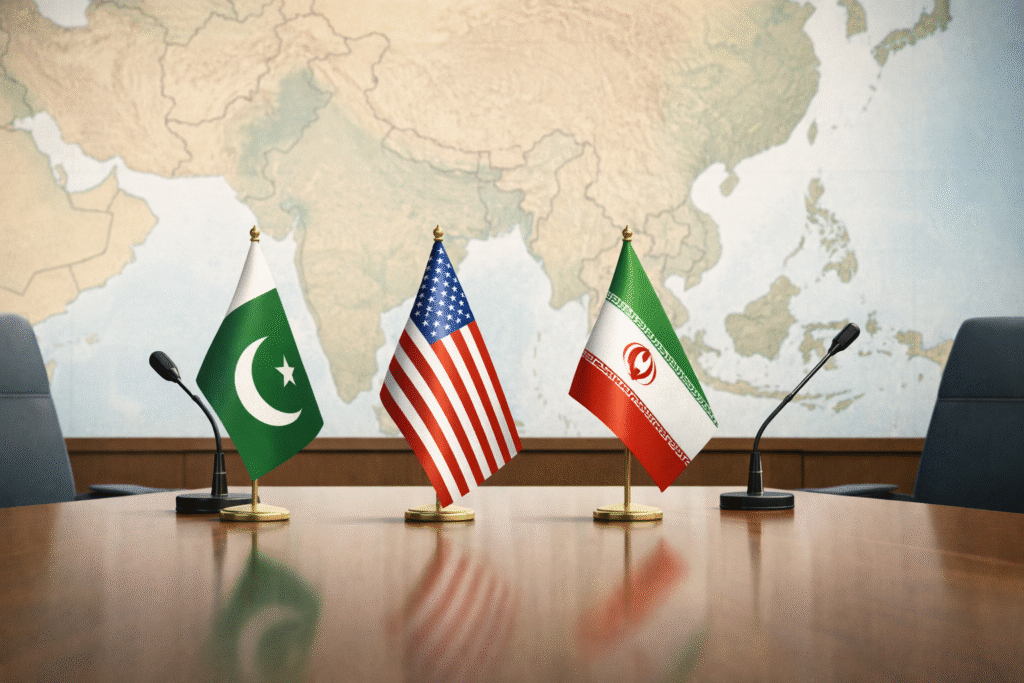
The clearest diplomatic winner of the Iran war is a country that was not a combatant: Pakistan. Field Marshal Asim Munir, operating as Trump’s trusted interlocutor, brokered the ceasefire that stopped a potential civilisation-level escalation. Pakistani PM Shehbaz Sharif announced the deal. The Islamabad talks will be hosted by Pakistan. Trump’s Truth Social post naming Sharif and Munir by name was a public validation of Pakistani diplomatic utility that will reverberate across South Asia for years.
This is the most stinging dimension of who won the Iran war for India. India spent the entire conflict calling for ceasefire, speaking with Gulf leaders and Iranian counterparts, and maintaining studied neutrality yet had no role in the resolution. Pakistan, which India has spent years trying to isolate and brand as a state sponsor of terrorism, is now the country that saved the world from a potential catastrophe. The gap between India’s self-image as an indispensable global voice and the reality of its diplomatic position has rarely been so visible.
For India, the ceasefire brings immediate practical relief the Strait of Hormuz reopening will ease the LPG shortage and allow energy markets to begin normalising. Oil futures fell 6% on ceasefire news, which is direct relief for India’s import bill. But the structural diplomatic damage Pakistan’s rise, India’s absence is not resolved by a ceasefire. It will require a fundamental rethink of India’s West Asia strategy.
ThirdPol’s Take
Who won the Iran war? The honest answer is that nobody won cleanly, and the two-week ceasefire is not a conclusion — it is an intermission. Israel achieved its immediate military objectives but has not secured a permanent end to Iran’s nuclear ambitions. The US performed militarily but retreated diplomatically by accepting Iran’s framework. Iran survived but at enormous cost. The Gulf states absorbed damage they did not want and did not cause. The global economy absorbed a supply shock described as the worst since the 1970s. And India, once again, watched a geopolitical inflection point unfold without a seat at the table where it was resolved. The only country that genuinely gained from this war without fighting it is Pakistan. That is perhaps the sharpest lesson of the 2026 Iran war for New Delhi: when the world’s crises are resolved, the countries that gain are those that made themselves useful to the powerful, not those that maintained principled distance from the conflict.
By Amit Mangal | ThirdPol | April 8, 2026
Pingback: India Gulf Diaspora Return: What Happens to Workers Coming Home?
Pingback: Iran War Timeline 2026: From Operation Epic Fury to Islamabad Ceasefire - ThirdPol