Iran Ceasefire Extended 2026: Trump Buys Time, Vance Grounded, and a Gujarat Ship Was Attacked
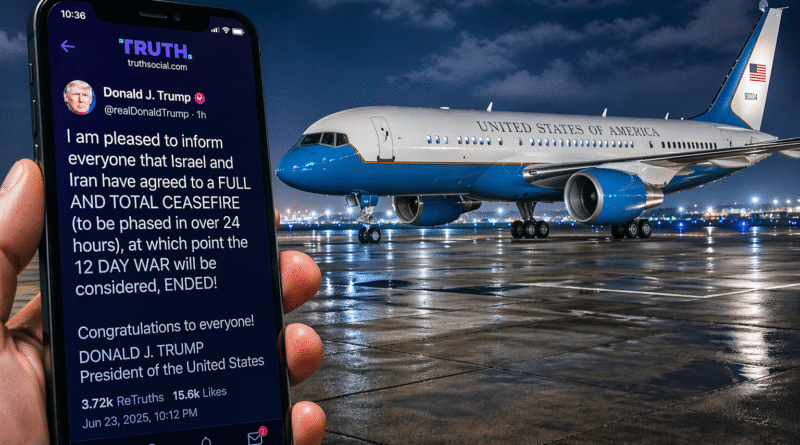
The Iran ceasefire extended 2026 story reached its most dramatic moment on April 21 when President Trump who had spent the morning on CNBC saying “I don’t want to do that” about extending the truce reversed himself hours later and posted on Truth Social that the ceasefire would continue indefinitely. The reason he gave was three words: “seriously fractured” government. The reason behind those three words is one person: Mojtaba Khamenei, Iran’s new Supreme Leader, who has not been seen publicly since his election on March 9 and who US officials now believe may be unable to give his negotiators clear directions either because of injury sustained in the February 28 strikes that killed his father, or because of internal IRGC pressure that is preventing him from authorising a compromise position.
The extension saved the ceasefire hours before it would have expired. It did not solve anything. The US naval blockade of Iranian ports remains in effect. The Strait of Hormuz remains contested both the US and Iran are restricting shipping while condemning each other’s actions. And this morning, the day after the extension, the IRGC attacked two ships near Hormuz, one of which was carrying cargo bound for Gujarat, India. The ceasefire exists. The war continues.
What Trump Actually Said and What He Had Said Hours Before
The sequence of events on April 21 deserves careful attention because it reveals how fragile the ceasefire architecture is and how much of it depends on moment-to-moment decisions by one man in Washington.
At approximately 8 a.m. Washington time, Trump appeared on CNBC’s Squawk Box and was asked directly whether he would extend the ceasefire to allow peace talks to reach a deal. His answer was unambiguous: “I don’t want to do that.” He added that Iran had “no choice” but to send a delegation to Pakistan and that he expected “to be bombing” Iran again in the near term if talks did not materialise.
By mid-afternoon, Air Force Two was on the tarmac at Joint Base Andrews with Vance’s bags loaded, ready to depart for Islamabad for the second round of talks. Then the administration received news that Iran had not confirmed it was sending a delegation. The Iranians had gone silent no response to the US list of broad deal points sent in the preceding days. Pakistani officials, who had been scrambling simultaneously to convince Iran to send a delegation and to convince Trump to extend the ceasefire, told Washington that the silence was not defiance but disorganisation: the Iranian leadership genuinely could not agree on a negotiating position to send back.
Trump huddled with his national security team. Vance’s trip was put on hold. And then, on Truth Social, Trump posted the extension announcement, citing Pakistan’s Field Marshal Asim Munir and Prime Minister Shehbaz Sharif by name as having requested the extension. The full quote matters: “Based on the fact that the Government of Iran is seriously fractured, not unexpectedly so and, upon the request of Field Marshal Asim Munir, and Prime Minister Shehbaz Sharif, of Pakistan, we have been asked to hold our Attack on the Country of Iran until such time as their leaders and representatives can come up with a unified proposal.”
The ceasefire would continue, Trump said, “until such time as their proposal is submitted, and discussions are concluded, one way or the other.” No deadline. No timeline. Just a waiting game until Iran produces a unified position or the US decides to resume strikes.
Why Mojtaba Khamenei Is the Wildcard
The core reason the Iran ceasefire extended 2026 situation is so unstable is that nobody not the US, not Pakistan, not Iran’s own diplomatic negotiators knows whether Iran’s Supreme Leader is giving clear instructions or whether his team is guessing.
Mojtaba Khamenei has not appeared in any video or audio since his election on March 9. His first public communication after taking power was a written statement read by a state TV anchor. US officials told CNN that a main reason the ceasefire extension happened is that the administration believes Mojtaba may be “unable to give his subordinates clear directions or if they’re simply having to guess what he wants without specific instruction.” Al Jazeera’s Tehran correspondent reported that Trump’s assertion about fractures in the Iranian leadership is likely a “misreading” of the situation that Iran has structural disagreements but not the kind of collapse of authority Trump’s language implies.
What is certain is that Iran’s political landscape is genuinely divided. The Deputy Speaker of Iran’s parliament, Hamid-Reza Haji Babaee, said publicly he has “faith in the military but not in the negotiations.” An advisor to parliament speaker Mohammad Baqer Qalibaf called Trump’s extension “a ploy to buy time” for a surprise strike and said the continued naval blockade “must be met with a military response.” Iran’s armed forces spokesperson said Iran is “100% ready” for any surprise US attack. These are not the statements of a government preparing to submit a unified peace proposal within three to five days.
Meanwhile, the IRGC whose institutional interests are served by war continuation, and whose political position is strengthened by the new Supreme Leader’s dependence on them continues to act autonomously. The two ship attacks today, including on a Gujarat-bound vessel, happened not in defiance of a ceasefire directive from Tehran’s diplomats but in parallel with one. This is the same pattern that produced the Sanmar Herald firing four days ago: Iran’s diplomatic track and Iran’s military track are operating as if they belong to different governments.
The Gujarat Ship Attack: India Back in the Crossfire
The attack on a Gujarat-bound cargo vessel today is the second time in less than a week that Indian shipping has been directly hit by IRGC action. After the Sanmar Herald firing on April 18, India summoned Iran’s envoy and lodged a strong protest. Today’s Gujarat ship attack happening on the Pahalgam anniversary, the same day India published its one-year assessment of the India-Pakistan relationship puts India in an extraordinarily difficult diplomatic position.
India has maintained careful neutrality throughout the Iran war. It has not joined the US blockade. It has called for dialogue and restraint. It has lobbied quietly for Chabahar exemptions. And Iran has now attacked Indian-flagged or India-bound shipping twice in four days. Each attack is a direct challenge to India’s declared neutrality not by the US, but by Iran itself. India’s silence on the Sanmar Herald firing was already drawing criticism. A second attack on India-bound shipping demands a stronger response, or India signals that its ships can be targeted without consequence.
The MEA has not issued a public statement on today’s Gujarat ship attack at time of writing. Watch for whether the response goes beyond summoning the envoy this time a formal written protest, a statement from EAM Jaishankar, or a public demand for Iranian accountability would each represent an escalation of India’s response posture. Any of those would be newsworthy and would signal that India is revising its approach to the Iran conflict.
What the Extension Actually Means: Four Readings
The Iran ceasefire extended 2026 development can be read in four different ways depending on which actor’s perspective you take, and all four are simultaneously true.
From Washington’s perspective, the extension is a tactical move to avoid resuming a war that Trump does not want to fight indefinitely, while maintaining pressure through the naval blockade and preserving the appearance of diplomatic progress. Trump’s advisers have privately warned him that removing the deadline removes leverage Iran can drag out negotiations indefinitely if there is no cost to delay. The three-to-five day informal deadline US officials mentioned to reporters is an attempt to restore that pressure without a formal announcement.
From Tehran’s perspective, the extension is a breathing space but also a trap. Every day without a unified Iranian proposal gives the US justification to resume strikes. Iran’s hardliners, who called the extension a “ploy,” are not wrong that it could be. But Iran’s pragmatists, who want a deal that preserves the nuclear programme and lifts the blockade, need time to build consensus in a leadership structure that is genuinely disorganised. The extension gives them time they need and pressure they cannot escape.
From Pakistan’s perspective, the extension is a diplomatic win. Islamabad asked for it by name and got it. Shehbaz Sharif and Asim Munir are named in Trump’s Truth Social post a personal endorsement from the American president of Pakistan’s mediation role. For a country that India tried to isolate after Operation Sindoor, being publicly credited by Trump with saving the Iran ceasefire on the Pahalgam anniversary is a diplomatic statement of extraordinary significance.
From India’s perspective, the extension is the least bad available outcome but it comes with a direct cost. The blockade continues, meaning Hormuz remains contested, meaning India’s energy imports remain disrupted and Chabahar remains inaccessible. The Gujarat ship attack today shows that even the ceasefire does not protect Indian commercial shipping. And the public crediting of Pakistan by Trump on the one-year anniversary of the Pahalgam massacre that Pakistan enabled is the kind of diplomatic asymmetry that India’s foreign policy establishment will find deeply uncomfortable.
ThirdPol’s Take
The Iran ceasefire extended 2026 situation is the most unstable it has been since the original ceasefire was agreed on April 8. The extension removes the deadline pressure that was the ceasefire’s primary enforcement mechanism. The blockade continues, giving Iran justification for continued Hormuz restrictions. Mojtaba Khamenei has three to five days to produce a unified proposal from a fractured leadership structure and there is no sign he can do it in that timeframe. The IRGC is attacking ships while diplomats negotiate. The most likely outcome over the next week is not a deal and not a resumption of full-scale war but a continued drift an extended ceasefire that is nominally in place while both sides continue to inflict economic pain through blockades and shipping attacks. That drift is sustainable for weeks, not months. At some point, the economic cost of a closed Hormuz $100 oil, disrupted supply chains, energy inflation across Asia will force either a deal or a resumption of strikes. India, which is paying that economic cost daily without having any seat at the table, should be making very clear to both sides that this drift is unacceptable and that its patience with attacks on Indian shipping has reached its limit.