India Pakistan 2026: One Year After Pahalgam Everything Has Changed
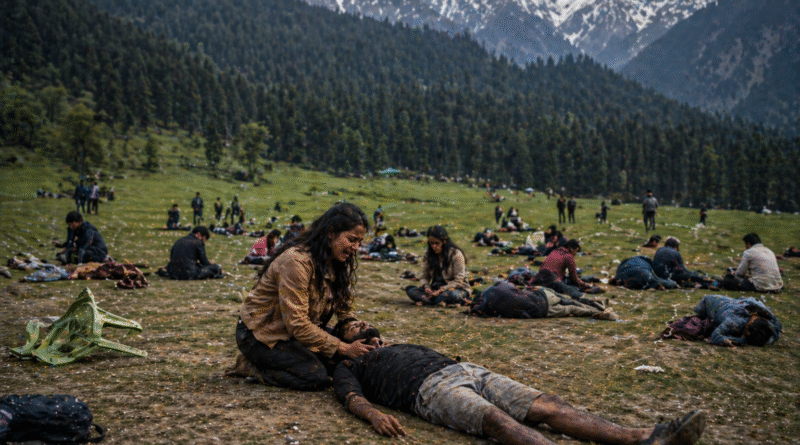
A year ago today, five gunmen emerged from forests above Baisaran Valley near Pahalgam in Jammu and Kashmir and opened fire on tourists sitting in a meadow. They asked the men to identify their religion before shooting. Twenty-six people were killed 25 tourists and one local pony-ride operator. The Resistance Front, a Lashkar-e-Taiba proxy, claimed responsibility and then retracted it. The world condemned the attack. And within two weeks, India had launched Operation Sindoor, the most significant Indian military action against Pakistan since the 1971 war. Here we will analyse India Pakistan 2026 relationship.
One year later, the India Pakistan 2026 relationship looks nothing like it did on April 21, 2025. The Indus Waters Treaty is suspended. Bilateral trade is cut. Diplomatic staffing is at its minimum. Kashmir is, paradoxically, experiencing a tourism recovery. And Pakistan having successfully mediated the Iran-US ceasefire in April 2026 has emerged from the post-Sindoor period with a diplomatic standing that has surprised analysts who expected it to be isolated. The question for this anniversary is not just what changed, but whether what changed is permanent.
What Operation Sindoor Actually Was and What It Wasn’t
Operation Sindoor was launched on the night of May 6-7, 2025, with precision strikes on nine sites in Pakistan and Pakistan Occupied Kashmir. The targets included LeT’s Markaz-e-Taiba headquarters in Muridke the most symbolically significant strike JeM’s Bahawalpur compound, and terror infrastructure in Muzaffarabad. The Indian government described the strikes as “focused, measured, and non-escalatory.” India stated no Pakistani military facilities were targeted.
Pakistan’s response was immediate. Over 400 drones were launched toward Indian military installations across Northern and Western India Awantipura, Srinagar, Jammu, Pathankot, Amritsar, Adampur, Bhuj and others. Not one penetrated Indian airspace or hit its target. India’s layered air defence network, anchored by the S-400 and the Akash missile system, and coordinated through the IACCS, ran a perfect defensive record. The four-day conflict which Pakistan codenamed “Operation Bunyan-un-Marsoos” became the world’s first full-scale drone war between nuclear-armed states. It ended with a ceasefire on May 10, 2025, agreed at the DGMO level.
What Operation Sindoor was not is as important as what it was. It was not a war-ending settlement. It was not accompanied by a diplomatic framework for normalisation. It was not followed by Pakistani acknowledgement of state sponsorship of the Pahalgam attack. And it did not, in any verifiable way, destroy LeT or JeM as functional organisations. India struck infrastructure. The human networks, the ISI relationships, the recruitment pipelines those remain. The “new doctrine” established by Sindoor is that India will strike across the border in response to state-sponsored terrorism without waiting for international permission. What it did not establish is a mechanism for making sure the strike changes Pakistan’s behaviour permanently.
The Five Things That Changed
The first and most consequential change is India’s declared doctrine. Before Pahalgam, India’s position was strategic restraint with limited cross-border action. After Sindoor, the government explicitly stated that any act of terrorism by non-state actors would be treated as an act of war by the sponsoring state. This “new normal” was formalised in PRAHAAR, India’s first comprehensive counter-terrorism policy, released by the Ministry of Home Affairs in February 2026. PRAHAAR establishes an integrated, whole-of-government approach to terrorism that explicitly includes coercive options as part of the standard response framework. The nuclear threshold has not changed. But the conventional response threshold has been permanently lowered.
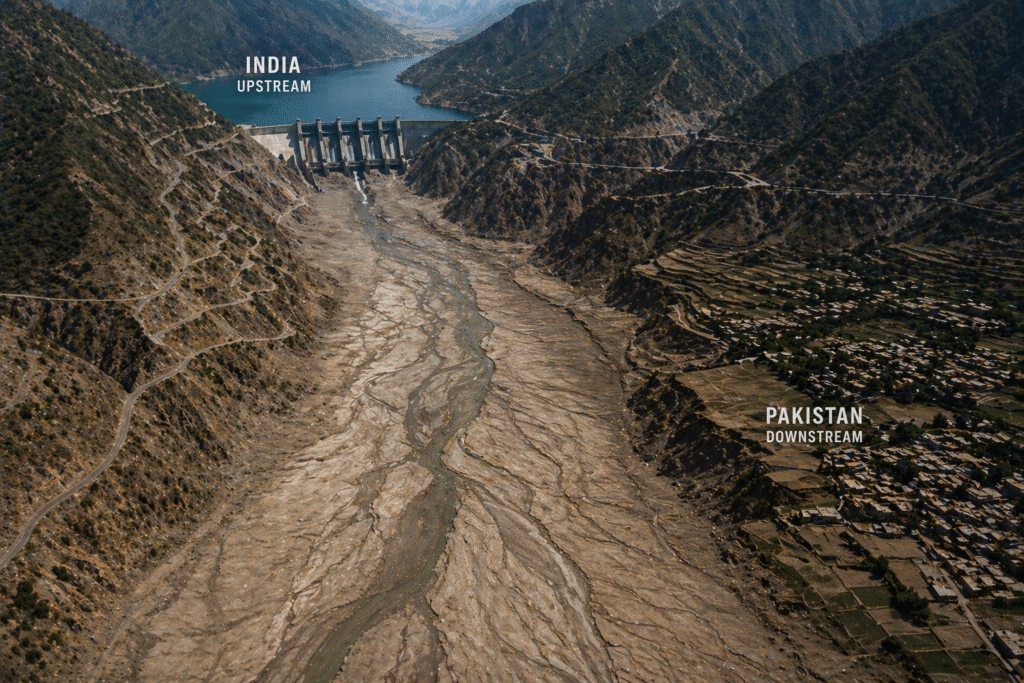
The second change is the Indus Waters Treaty suspension. The treaty, signed in 1960 and brokered by the World Bank, had survived every India-Pakistan war since its signing the 1965 war, the 1971 war, the 1999 Kargil conflict. It was described as the most successful international water-sharing agreement in history precisely because it survived political hostility between the two countries for six decades. India suspended it on April 23, 2025 the day after Pahalgam. Pakistan called it weaponisation of water and an act of war. Pakistan approached the Permanent Court of Arbitration. India remains firm. Union Power Minister Manohar Lal Khattar inspected hydropower projects along the Chenab in January 2026, directing officials to commission Pakal Dul by December 2026 a clear signal that India is not merely pausing but actively accelerating use of water resources previously constrained under the treaty. The IWT’s suspension is the most structurally significant change in India-Pakistan relations since Partition.
The third change is the bilateral economic relationship which has essentially ceased to exist. Trade is suspended. Airspace is closed to each other’s airlines. Diplomatic staffing is at minimum levels. The Attari-Wagah border ceremony is reduced to formality without the symbolic handshake. Cricket ties outside ICC-sanctioned events are cut. The economic relationship between India and Pakistan, which was already negligible, is now formally non-existent. Pakistan’s Major Non-NATO Ally status with the US which India has been pressing Washington to revoke remains formally in place as of this writing, a continuing point of Indian frustration.
The fourth change is the security architecture in Kashmir. India has launched a series of post-Sindoor counter-terrorism operations Operation Mahadev, Operation Trashi-1, Operation Amrit that have significantly degraded infiltration networks. The three Pahalgam attackers were all eliminated by July 28, 2025, in what the Army described as a 93-day manhunt. Tourist arrivals in Kashmir are recovering photographs from Pahalgam today, on the anniversary, show visitors returning to the Baisaran Valley, accompanied by heavy security infrastructure. Kashmir’s “normalisation” narrative, which the attack had shattered, is being rebuilt carefully.
The fifth change is Pakistan’s regional standing and this is the change that has most surprised Indian analysts. Instead of being isolated after Sindoor, Pakistan used its relationship with both the US and Iran to position itself as the ceasefire mediator in the Iran-US conflict of 2026. PM Shehbaz Sharif brokered the April 8 ceasefire. The Islamabad talks hosted on Pakistan’s soil were the most significant diplomatic event in the region since the 2023 G20. Pakistan’s COAS Asim Munir was promoted to Field Marshal for his role in Sindoor. Pakistan nominated Trump for the Nobel Peace Prize for the ceasefire brokerage. None of this was part of any Indian strategic calculation.
The Three Things That Have Not Changed
Pakistan’s fundamental posture on terrorism has not changed. The ISI’s relationship with LeT and JeM has not been structurally altered by Sindoor. The safe houses, the training infrastructure, the financial networks, the political cover provided by Pakistan’s deep state these are not destroyed by airstrikes on headquarters buildings. India’s NIA filed a 1,597-page chargesheet in December 2025 tracing the Pahalgam conspiracy directly to Pakistan. The primary handler Sajid Saifullah Jatt remains in Lahore. Hafeez Saeed remains in nominal Pakistani custody. The architecture that produced the Pahalgam attack remains intact.
The Kashmir dispute has not changed. India’s position that Kashmir is an integral part of India, that the Line of Control is the de facto border, that Pakistan must vacate Pakistan Occupied Kashmir has not moved. Pakistan’s position that Kashmir is disputed territory requiring a plebiscite, that the 1948 UN resolutions are binding has not moved. Trump’s offer to mediate the broader Kashmir dispute, made during the Sindoor crisis, was immediately and firmly rejected by India and cheerfully accepted by Pakistan. The offer has gone nowhere. The dispute that has defined South Asian geopolitics since 1947 remains exactly where it was on April 21, 2025.
And nuclear deterrence has not changed but the conversation around it has. Pakistan’s nuclear signalling during Sindoor was more explicit than at any previous crisis. As India struck deeper into Pakistan than any previous Indian operation, Pakistani officials, including some connected to the security establishment, made references to nuclear thresholds. India’s government explicitly stated that India “ended the nuclear blackmail of Pakistan” by striking despite those signals meaning India demonstrated that Pakistan’s nuclear umbrella does not protect its terror infrastructure from Indian conventional retaliation. That demonstration is significant. It also makes the next crisis more dangerous, because the deterrence logic becomes more complicated when one side has proved it will act through nuclear warnings.
Pakistan’s Unexpected Diplomatic Comeback
The India Pakistan 2026 narrative that most surprised analysts was Pakistan’s ability to leverage the Iran war into a diplomatic rehabilitation. When the US-Israel strikes on Iran began on February 28, 2026 — three weeks after Pakistan’s Field Marshal Asim Munir had consolidated his domestic position after Sindoor — Pakistan found itself holding a unique asset: relationships with both Washington and Tehran that neither party had with each other.
Pakistan brokered the April 8 ceasefire and then hosted the Islamabad talks on April 11-12. That those talks collapsed is relevant, but it does not undo Pakistan’s diplomatic rehabilitation. The country that India had tried to isolate after Pahalgam became the host of the most important diplomatic gathering in the world within twelve months. Pakistan’s UN Ambassador Munir Akram pointed this out with undisguised satisfaction: the country that India described as a state sponsor of terrorism is now being described by Trump and Vance as a “trusted mediator.”
This asymmetry, India winning militarily and losing diplomatically is the central tension in India Pakistan 2026. India struck harder and with more precision than any previous operation. Pakistan’s terror infrastructure was damaged. The new doctrine was established. But in the court of international opinion, the ceasefire that ended Sindoor was brokered by Trump and claimed as his own, Pakistan was credited with facilitating the Iran talks, and India found itself without a clear narrative for what Sindoor ultimately achieved beyond the strikes themselves.
ThirdPol’s Take
India Pakistan 2026, one year after Pahalgam, is a relationship that has been structurally altered without being resolved. The Indus Treaty suspension is the most significant change not because water will be weaponised tomorrow, but because it signals that India is willing to use levers it previously kept off the table. The new terrorism doctrine is real and has been operationalised in the months since. Pakistan’s terror infrastructure is degraded but not destroyed. And the diplomatic landscape is more complex than India expected: Pakistan is a ceasefire mediator in 2026 while simultaneously being the sponsor of the Pahalgam massacre of 2025. This coexistence of military defeat and diplomatic rehabilitation is the defining paradox of India Pakistan 2026. India needs to resolve it not through more military strikes which, however successful tactically, do not solve the state sponsorship problem but through sustained international pressure that makes Pakistan’s support for terrorism structurally incompatible with its participation in the global diplomatic system. That is a harder, slower, and less satisfying strategy than a precision strike. It is also the only one that works.
By Amit Mangal | ThirdPol | April 22, 2026