India Kusha Missile Test: A Homegrown S-400 Rival
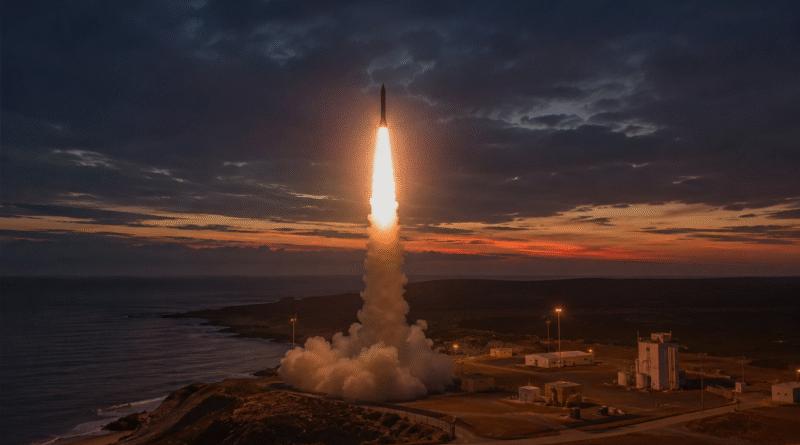
The India Kusha missile test on Thursday was small in duration and enormous in intent. From A.P.J. Abdul Kalam Island off the coast of Odisha, a long-range surface-to-air interceptor rose into the sky and successfully struck a simulated high-speed, high-altitude aerial target. The Defence Ministry called it a key milestone. Defence Minister Rajnath Singh called it a giant leap. Both descriptions are fair, because this single test is the first real evidence that India can build something in the same strategic class as Russia’s S-400 Triumf, a system India has depended on for years and still cannot fully produce at home.
What The India Kusha Missile Test Actually Proved
Strip away the ceremony and the test proved one specific thing: an Indian-built interceptor, radar, and command system can detect, track, and destroy a fast-moving aerial threat at long range, entirely without foreign components. According to the Defence Ministry, every element of the system, missile, radar, and command centre, was developed domestically by the DRDO and Indian industry partners. That matters because India currently has strong short and medium-range air defence, largely through the Israeli co-developed Barak-8, which covers around 70 kilometres. But the gap between that and the S-400’s 400-kilometre coverage has been wide open, filled entirely by imported Russian systems.
Kusha is designed to close that gap. The programme includes three separate variants, with approximate ranges of 150 kilometres, 250 kilometres, and 350 to 400 kilometres. The Defence Ministry has not disclosed which variant was tested this week, but if the top-end variant eventually matches its target range, it would put India in a very small club of nations capable of building long-range interceptor systems on their own.
Why This Gap Actually Matters
India’s air defence needs are not abstract. Along the border with Pakistan, reaction time is short, and interceptors need to be able to shoot down incoming threats far from population centres, not directly above them. Security analyst Dinakar Peri of Carnegie India noted that the S-400 played a central role during last year’s conflict with Pakistan, and that India’s current air defence architecture, while solid, may not be sufficient for the next one. Modern threats, drones, cruise missiles, long-range rockets, and combat aircraft, are evolving faster than most legacy systems were designed to handle, which is exactly why India approved a 5.4 billion dollar Defence Acquisition Council package earlier this month for counter-drone and layered air-defence capability.
China adds a second layer to this calculation. India’s long border with both Pakistan and China means any credible air defence upgrade has to cover very different threat profiles simultaneously, from lower-altitude drone swarms to high-altitude fighter aircraft and ballistic threats. A homegrown long-range system that can be produced and expanded domestically, rather than purchased in fixed batches from Russia, gives India far more flexibility in scaling coverage to match whichever front needs it most at a given time.
The Import Dependency Problem This Solves
India remains one of the world’s largest defence importers, a fact that sits uncomfortably next to its stated ambition of strategic autonomy. Even as Kusha was being tested, India had separately approved the acquisition of five additional S-400 systems from Russia earlier this year, reinforcing rather than replacing the dependency in the near term. That is the honest caveat here: officials say Kusha still needs several more years of validation trials before it is ready for operational deployment, likely three to four years out. Until then, India’s long-range air defence will continue to lean heavily on Russian hardware, regardless of how promising this week’s test looked.
What makes the India Kusha missile test significant is not that it immediately replaces the S-400. It does not, and will not for years. What it does is demonstrate, for the first time, that the underlying technology base exists domestically to eventually make that replacement possible, which changes the terms of every future negotiation India has with Russia, Israel, or any other supplier of air defence systems going forward.
What Comes Next For Kusha
The programme’s near-term roadmap involves additional trials to validate the tested variant and eventually test the longer-range 250 and 350 to 400 kilometre versions. Each successful test will be watched closely, both domestically and by regional militaries, since India’s ability to eventually field a fully indigenous S-400 equivalent would materially change deterrence calculations along both its western and northern borders. For now, the message from New Delhi is one of measured confidence: the technology works in principle, the timeline is realistic rather than rushed, and the dependency on foreign air defence systems, while not disappearing anytime soon, finally has a credible domestic alternative in the pipeline.
UPSC Key Points
- Kusha: India’s indigenous long-range surface-to-air interceptor missile system, developed by DRDO.
- Maiden flight test conducted Thursday, July 23, 2026, from A.P.J. Abdul Kalam Island, Odisha.
- Test successfully intercepted a simulated high-speed, high-altitude aerial electronic target.
- Three planned variants: approx. 150 km, 250 km, and 350-400 km range.
- Existing systems: S-400 Triumf (Russia, ~400 km range), Barak-8 (India-Israel co-developed, ~70 km range) — Kusha aims to bridge the gap.
- All elements (missile, radar, command centre) developed domestically by DRDO and industry partners.
- India separately approved acquisition of 5 additional S-400 systems from Russia earlier in 2026.
- Operational deployment expected only after 3-4 years of further validation trials.
- $5.4 billion Defence Acquisition Council approval earlier in July 2026 covered counter-drone and layered air-defence capability.