India Defence Exports 2026: How India Crossed the $3 Billion Mark and What Comes Next
India has crossed a threshold it has been trying to reach for a decade. Defence exports in financial year 2025-26 are expected to surpass $3 billion for the first time, according to government projections. That number matters but the composition of those exports matters more.
India defence exports 2026 represent a genuine shift in the country’s defence industrial posture, though one that still has significant structural limitations that enthusiastic headline writers tend to skip past.
What India Is Actually Exporting
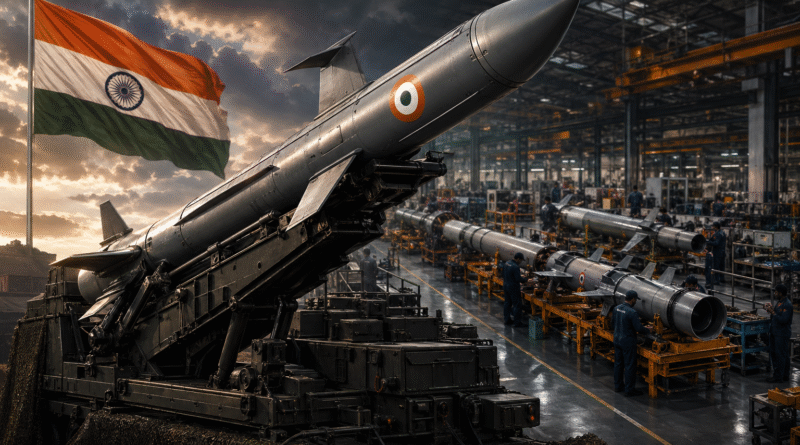
The biggest ticket item in India’s defence export portfolio is the BrahMos supersonic cruise missile, which India co-develops with Russia. The Philippines signed a deal in 2022 and has been receiving deliveries. Several other Southeast Asian and Middle Eastern countries are in various stages of negotiation. BrahMos is a world-class product Mach 2.8 speed, sea-skimming capability, and a range that has been progressively extended and it is genuinely competitive in global arms markets.
Beyond BrahMos, India is exporting artillery ammunition, small arms, military vehicles, radar systems, and ship components. The Dhanush howitzer has attracted attention from African and Southeast Asian militaries. Indian shipyards have contracts for offshore patrol vessels with several smaller navies. Hindustan Aeronautics Limited (HAL) has been in discussions for the Tejas fighter with several countries, though no major export contract has been signed yet.
The india defence exports 2026 number also includes components and sub-systems manufactured in India for global defence companies Airbus, Boeing, and others have shifted production of specific parts to Indian facilities. This is real export revenue but it is not the same as India exporting a weapons system.
The BrahMos Dependency Problem
India’s defence export growth story has a concentration problem. Strip out BrahMos and the numbers look considerably thinner. The missile accounts for a disproportionate share of the value in recent export projections, and BrahMos sales depend on factors including Russia’s foreign policy position and US comfort with sales to specific countries that are outside India’s full control.
The government’s stated target is $5 billion in defence exports by 2025 (a target that has been progressively revised forward). Reaching that target on BrahMos alone is not sustainable. What India needs to demonstrate is that it can win system-level contracts for platforms aircraft, submarines, missiles, armoured vehicles without Russian co-production involvement.
That is a harder ask. India’s indigenous defence platforms remain expensive relative to comparable offerings from established exporters. The Tejas Mk1A, for instance, competes at a price point where it faces competition from used F-16s, JAS-39 Gripens, and Chinese FC-1s. Each of those has advantages that Tejas currently cannot match on every dimension.
Why This Matters for the US
India defence exports 2026 is a topic that US policymakers and defence industry players are watching with interest. For American firms, India’s growing defence manufacturing capability is both an opportunity and a complication. An opportunity because Indian manufacturers need US-origin technology and sub-systems to build competitive products creating potential licensing and co-production business. A complication because Indian exports of US-technology-embedded systems require US government approval, and the State Department’s ITAR controls are not always synchronised with India’s export ambitions.
The GE F414 engine deal for Tejas is the clearest example of this dynamic. GE is manufacturing in India, transferring technology, and the Indian government wants to use that engine in platforms it eventually exports. How much of the GE technology transfers with the export is a live negotiating question.
The Realistic Assessment
India defence exports 2026 is a genuine success story, with the asterisk that the story is still in its early chapters. India has built the institutional infrastructure the defence corridors in Uttar Pradesh and Tamil Nadu, the iDEX innovation ecosystem, and a more streamlined export licensing process to support a growing industry. The pipeline of potential deals is real. But transforming pipeline into signed, delivered, paid contracts at the system level will define whether the next five years deliver on the ambition.
By Amit Mangal | ThirdPol | April 2026