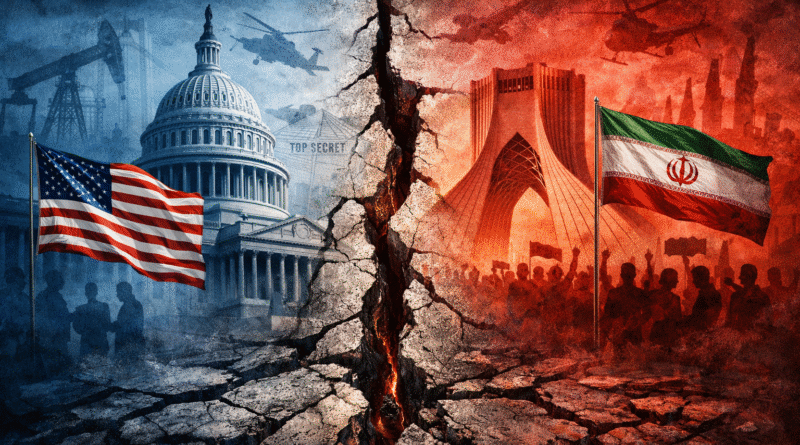
USA and Iran Relations: A History of Conflict and Mistrust
The relationship between USA and Iran did not come apart overnight. It began to fray slowly over the years, through the intervention of foreign powers, revolutions, wars, and opportunities for trust that were missed. What is happening today is not a sudden outbreak of animosity but rather the culmination of a long and painful history.
To grasp the current level of tension between USA and Iran, it is important to turn back the clock. The origins of the conflict go well beyond nuclear negotiations and sanctions. They date back to the middle of the last century, when global politics of power took precedence over national sovereignty.
The 1953 Turning Point That Changed Everything
In 1953, the usa was instrumental in the overthrow of the democratically elected prime minister of Iran, Mohammad Mossadegh. The problem with Mossadegh, from the usa’s perspective, was that he nationalized Iran’s oil industry. This was seen as a threat to usa and British strategic and economic interests.
A CIA-led coup brought Mossadegh down and restored Mohammad Reza Pahlavi, the Shah, to absolute power. On paper, this action served usa and British strategic interests. In reality, it planted the seeds of anger and humiliation in Iranian society.
For Iranians, this moment in history has come to represent how they perceive the USA. Not as an ally but as a power that will not hesitate to intervene when it serves its interests. This one act is still having a resonance in USA and Iran relations today.
The 1979 Revolution and a Complete Breakdown
By the late 1970s, anger against the Shah was reaching a boiling point. His regime was viewed as authoritarian, out of touch with the people, and supported by foreign powers. In 1979, the Islamic Revolution swept him away.
What happened next shocked the world. Islamic Revolution students stormed the US embassy in Tehran and held American diplomats hostage for 444 days. Relations plummeted. Trust was lost.
From this point on,USA and Iran were no longer awkward partners. They became outright enemies.
The Iran-Iraq War and Escalating Enmity
The 1980s saw things go from bad to worse. During the Iran-Iraq War, the United States sided with Iraq. This was viewed as another stab in the back by Iran. The war ravaged Iranian society and stiffened Iranian resolve.
There was one incident that still wounds to this day. In 1988, a US Navy vessel downed Iran Air Flight 655, killing all 290 civilians on board. The US government claimed it was an accident. In Iran, it was remembered as another example of Iranian lives being treated with contempt.
Each incident piled another brick in the wall of mistrust betweenUSA and Iran.
Nuclear Standoffs and a Brief Moment of Mending
By the 2000s, the Iranian nuclear program had become the focal point. The US and its allies accused Iran of developing nuclear weapons. Iran claimed its program was for peaceful purposes.
In 2015, after years of negotiations, a breakthrough finally came. Iran and the world’s major powers signed the Joint Comprehensive Plan of Action, also known as the nuclear agreement. Sanctions were lifted. Inspections increased. For a brief moment, there was hope.
That hope was short-lived.
In 2018, then US President Donald Trump pulled out of the agreement. Sanctions were reimposed. Pressure mounted. Iran responded by reducing its commitments.
The delicate bridge between USA and Iran was broken once again.
Assassinations and Escalation
The situation escalated further in 2020 when the US assassinated Iranian military leader Qasem Soleimani in a drone attack. Soleimani was a high-ranking official in Iran’s foreign policy. His assassination led to widespread grief in Iran and threats of retaliation.
This was no longer a matter of diplomatic competition. This was direct engagement.
2025 Strikes and a Dangerous New Phase
In June 2025, the crisis escalated into a new and dangerous phase. The United States, in partnership with Israel, launched strikes against Iranian nuclear sites. The US explained that the strikes were intended to weaken Iran’s nuclear program. Iran perceived this as an assault on its sovereignty.
The attack sparked concerns of a broader war in the Middle East. Experts indicated that USA and Iran were now on the brink of war than at any point in the past decade.
Why This History Still Matters
The USA and Iran history is more than a simple geopolitical conflict. It is a story of memory. Iran remembers 1953. The US remembers 1979. Each side sees itself as the victim.
Unless this history is recognized, future negotiations will be precarious. Force alone has never solved this crisis. Force has not reduced suspicion. And violence has only increased pain.
If USA and Iran are to move forward, they must first come to terms with the past in a truthful manner. Until then, the specter of history will continue to haunt every move, every attack, and every failed negotiation.
The Analysis Desk at ThirdPol analyses political and economic developments in Iran and their wider impact on West Asian geopolitics.
Pingback: India–US Trade Deal 2026: What It Really Means - ThirdPol
Pingback: Iran Nuclear Deal: Geopolitics, US Policy & India’s Interests
Pingback: India and Israel Ties Amid West Asia Tensions
Pingback: Ayatollah Khamenei Dead: What It Means for India–Iran Relations
Pingback: US Iran Conflict Escalates After Major Air Strikes