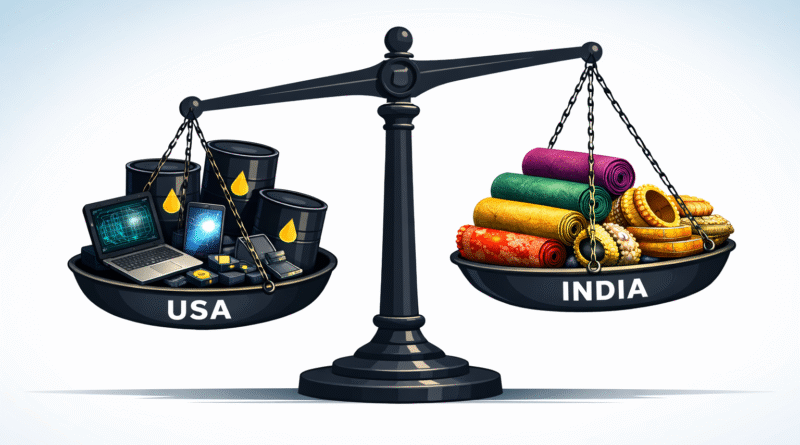
Trump Tariffs India 2026: From 50% to 18% Deal
Trump tariffs India 2026 produced one of the most consequential economic deals of the year and one of the most contested. In August 2025, the Trump administration stacked two separate 25% tariffs on Indian goods, bringing the total rate to 50%: the highest levy the US imposed on any major democratic partner. Six months later, on February 2, 2026, Trump and Modi spoke by phone and announced an “Interim Agreement.”
The tariff on Indian goods came down to 18%. The crisis appeared over. But the fine print of what India committed to in exchange stopping Russian oil purchases, opening its market to US goods at zero tariff, a $500 billion US-product pledge, new digital trade rules means the deal is more complicated than the headline. Understanding Trump tariffs India 2026 requires understanding not just what changed, but what India gave away to make the change happen.
How It Started: The 50% Tariff and Why India Was Targeted
India’s problems with the Trump administration began in April 2025, when Trump’s global “Liberation Day” tariffs imposed a 10% baseline duty on goods from almost every country. For India, an additional country-specific 15% reciprocal tariff was added in August 2025, bringing the total to 25%.
Then came the Russia complication. India had been buying approximately 1.5 million barrels of Russian crude oil per day throughout 2024 and 2025 a practice that allowed it to access deeply discounted oil (roughly $16 per barrel below OPEC prices) at a time when global energy costs were elevated. The Trump administration viewed these purchases as propping up Russia’s war in Ukraine. On August 27, 2025, Trump signed an executive order imposing an additional 25% punitive tariff on India specifically for buying Russian oil. Total effective tariff on most Indian goods: 50%.
The 50% rate was punishing. India exports approximately $87-95 billion worth of goods to the US annually, making the United States India’s largest single export destination. The sectors hit hardest were textiles and apparel, gems and jewellery, auto parts, leather goods, chemicals, and engineering products. Indian exporters in these sectors faced sudden uncompetitiveness in the American market. Jefferies estimated the tariffs would shave 0.3-0.5% off India’s GDP growth rate if sustained. Jeff Sachs called it a “strategic error.” Former US Ambassador to India Kenneth Juster said India’s “surprise and indignation” at being treated worse than China (which also buys Russian oil but received lower tariff rates) was entirely justified.
Trump Tariffs India 2026: The Full Timeline
| Date | Event |
| Apr 2, 2025 | 10% baseline “reciprocal” tariff on all Indian goods. Part of global Liberation Day tariff announcement. |
| Aug 1, 2025 | Additional 15% country-specific reciprocal tariff on India. Total: 25% reciprocal rate. |
| Aug 27, 2025 | Additional punitive 25% tariff on India specifically for buying Russian oil. Total: 50% on most Indian goods. |
| Aug–Jan 2026 | India-US trade talks begin. India strongly protests 50% rate. Trump calls Indian tariffs “obnoxious.” Relations at decade-low. |
| Feb 2, 2026 | Trump-Modi call. “Interim Agreement” announced. US drops Russia-oil tariff (25%) and reduces reciprocal tariff from 25% to 18%. Effective rate: 18%. |
| Feb 9, 2026 | White House Joint Statement formalises deal. India commits to $500B in US purchases over 5 years, zero tariffs on US goods, stop buying Russian oil. |
| Feb 25, 2026 | US Commerce Department imposes 126% countervailing duty on Indian solar panels. Not covered by the trade deal. |
| Ongoing | Full Bilateral Trade Agreement (BTA) negotiations continuing. Agriculture, digital trade, pharma, and non-tariff barriers unresolved. |
The February 2026 Deal: What Each Side Got
The Trump-Modi call on February 2, 2026 produced an “Interim Agreement” a partial deal that reduced tariffs immediately while leaving the harder questions for a full Bilateral Trade Agreement (BTA) to be negotiated later.
| Issue | Before deal | After deal | Who benefits? |
| US tariff on most Indian goods | 50% (Aug–Feb 2026) | 18% (from Feb 2, 2026) | India wins — significant relief for exporters |
| Russia-oil punitive tariff | 25% extra | Removed completely | India wins — but had to stop buying cheap Russian oil |
| India tariffs on US goods | High — average 10–15% | To be reduced to zero (BTA negotiations) | US wins — major market access gain |
| Indian solar panel tariffs | 0% (before Feb 2026) | 126% countervailing duty (Feb 25, 2026) | India loses — solar sector specifically targeted |
| Russian oil purchases | India buying ~1.5M barrels/day | India committed to stop; shift to US/Venezuela | India loses — energy cost will rise |
| US energy purchases | India buying minimal US energy | $500B commitment over 5 years | US wins — major new energy market |
| Pharma tariffs on Indian generics | Currently exempted | Under BTA negotiation — risk of future tariffs | India uncertain — $9B+ pharma exports at risk |
| Digital trade rules | India protects domestic platforms | India committed to “robust” digital trade rules | US wins — opens digital market access |
The headline number 18% from 50% looks like a major Indian win. And in terms of immediate export relief, it was. Textile exporters, gem traders, and auto parts manufacturers who had been facing an existential tariff cliff regained competitiveness almost overnight. The 18% rate puts India roughly at par with Southeast Asian countries, removing the punitive premium India had been carrying.
But the concessions India made are substantial and in several cases, structurally significant.
What India Actually Gave Up
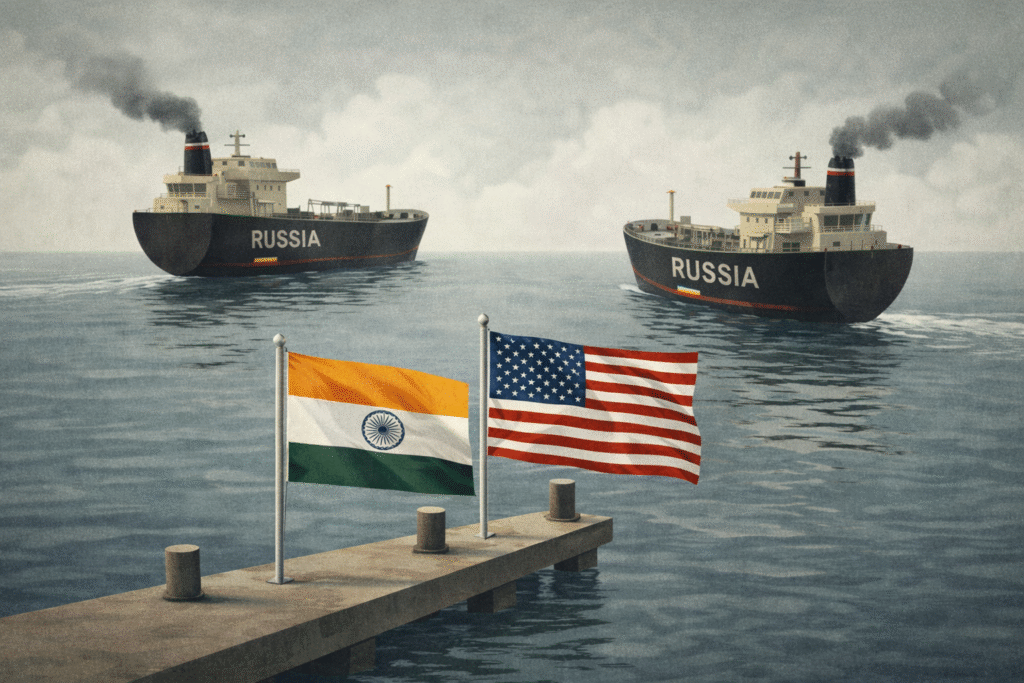
Three concessions stand out as particularly consequential.
First, Russian oil. India committed to stop buying Russian crude and shift sourcing to the US and potentially Venezuela. Russia had been supplying over a third of India’s total oil imports at a significant discount. Abandoning that supply means paying more for energy estimates suggest India’s oil import bill could rise by $8-12 billion annually depending on how fully the switch happens. Russian oil has been discounted partly because Western sanctions made it difficult to sell elsewhere. If India exits the Russian market, that discount pressure on Moscow also eases an indirect benefit to Russia from India backing down. Modi’s post on X welcoming the reduced tariff notably did not mention the Russian oil commitment. India watchers saw the omission.
Second, zero tariffs on US goods. India agreed to eliminate or reduce tariffs on all US goods as part of the BTA negotiations, with the goal of reaching zero. India currently has an average applied tariff of around 10-15%, with peak rates in agriculture (up to 100% on some products) and significant protection in dairy, poultry, and certain manufactured goods. Opening these sectors to US competition will be politically difficult and economically disruptive for Indian farmers and producers who have relied on tariff protection. The Indian government has not yet detailed which specific tariffs will be reduced the “to zero” framing from the White House is aspirational language that the BTA negotiations will test.
Third, digital trade rules. India’s digital economy has been protected by data localisation requirements, import licensing restrictions on ICT goods, and limits on foreign digital platforms. The interim agreement commits India to “robust” bilateral digital trade rules that “address discriminatory or burdensome practices.” For US tech companies Google, Meta, Amazon, Apple this is a significant opening. For India’s domestic tech sector and for Indian data sovereignty ambitions, it is a concession that will face domestic political resistance.
What the Deal Did Not Solve: The Remaining Risks
The Interim Agreement reduced the immediate tariff pain. It did not resolve several structural vulnerabilities in the India-US trade relationship.
Indian generic pharmaceuticals worth over $9 billion in annual exports to the US and critical to American healthcare costs, supplying roughly 40% of US generic drug needs were exempted from the reciprocal tariffs before the deal and remain exempted. But the BTA negotiations specifically include pharmaceuticals as a sector requiring discussion.
US pharma companies have long complained about India’s compulsory licensing provisions and its rejection of patent linkage, both of which allow Indian generics makers to produce low-cost versions of patented medicines. If the BTA negotiations result in India agreeing to tighter pharmaceutical IP protections in exchange for tariff relief, the cost to American consumers who depend on Indian generics could be significant. This is a case where the Indian concession and the American concession are both real.
Indian solar panel exports were not protected by the deal. On February 25, 2026 just three weeks after the Interim Agreement the US Commerce Department imposed preliminary countervailing duties of 126% on Indian solar panels, alleging illegal subsidies. India’s solar export sector, which had been growing rapidly, took a direct hit. The 126% duty effectively closes the US market to Indian solar panels. This was not covered by the Interim Agreement and illustrates that the deal’s tariff reductions are sector-specific and do not provide broad protection.
The BTA negotiations themselves are uncharted. India and the US have been trying to negotiate a comprehensive trade deal since 2019 — every previous attempt has stalled over agriculture, dairy, medical devices, and e-commerce rules. The current framework gives both sides six months to make progress on specific issues before the tariff reductions are formally locked in. If negotiations stall as they have historically the tariff situation could become uncertain again.
ThirdPol’s Take
The Trump tariffs India 2026 episode is a masterclass in the asymmetry of trade negotiations between a dominant economy and an aspiring one. India was hit with a 50% tariff not because of a structural trade dispute but largely because Trump was annoyed about the Operation Sindoor ceasefire, wanted India to stop buying Russian oil, and needed a deal he could announce as a personal victory. India, facing real economic pain, came to the table and got real relief — 18% is genuinely better than 50%. But the price was stopping cheap Russian oil purchases, opening the market to US goods at zero tariff, and making digital trade commitments that undermine domestic tech regulation.
The full cost of what India agreed to will become clear only over years, as the BTA is negotiated, as US pharma and agriculture push for deeper access, and as Indian energy import bills reflect the end of Russian discount oil. The deal was necessary. Whether it was wise depends on how India executes the BTA negotiations that are now the critical battleground.
By Amit Mangal | ThirdPol | April 2026
Pingback: India EU Trade Deal 2026: Who Wins, Who Loses and Why It Took 16 Years