Trump China Visit 2026: What Happens to India When the US Courts Beijing
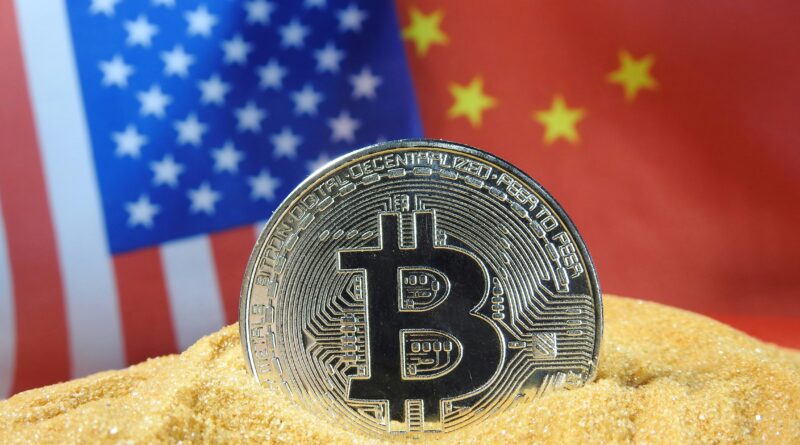
The Trump China visit 2026 dynamic is the defining foreign policy geometry of 2026 and India is not at its centre. This month, Donald Trump is expected to land in Beijing for his first presidential visit to China since his 2017 Forbidden City reception, when Xi Jinping rolled out a red carpet of extraordinary ceremonial warmth and Trump called the trip “magnificent.” On his way to or from Beijing, Trump will not stop in India. He will not attend the Quad summit that India was supposed to host. He will not shake Modi’s hand for the cameras in New Delhi. Instead, Secretary of State Marco Rubio will visit India around May 26 the same week Trump may be in Beijing for what has been carefully not described as a leaders’ summit. The contrast is not subtle. China gets the president. India gets the secretary of state. And every country in the Indo-Pacific is drawing its own conclusions about what that asymmetry means for the next four years of American foreign policy.
Following global politics daily?
Join ThirdPol Telegram for fast updates and exclusive analysis.
Readers already trust your content here.
Why Trump Is Going to Beijing
Trump accepted Xi’s Beijing invitation in late 2025, following their October 30 meeting in Busan, South Korea a summit that both sides described as productive and that eased the worst of the tariff tensions between the world’s two largest economies. Xi’s motivation for the invitation was transparent: China wants to lock in a period of stable US-China relations during which it can pursue its strategic objectives in Taiwan, the South China Sea, and global trade without American disruption. Inviting Trump to Beijing with its Forbidden City theatrics and state-plus ceremonial treatment is a proven technique for managing Trump’s ego and buying diplomatic goodwill.
Trump’s motivation is equally transparent. He wants a trade deal. The tariff war with China that defined his first term cost both economies significant damage. The Busan meeting produced a temporary truce. A Beijing summit, in Trump’s transactional framework, is the opportunity to announce a grand bargain reduced tariffs in exchange for Chinese commitments on fentanyl, trade deficits, or manufacturing investment in the US. Whether such a bargain is achievable or durable is less important to Trump than the optics of announcing one. He returned from his 2017 Beijing trip calling it a great success and then launched the most aggressive trade war with China in American history within months. The pattern of Trump diplomacy warm summits followed by policy reversals is well established.
Brookings described the visit as “the first half of the game setting the tone for bilateral relations in 2026 without resolving everything at once,” with Xi planning a return visit to the United States later in the year. The Chinese side views 2026 as a critical window for resetting the relationship: Xi told Trump in February that he hopes to make 2026 a year where the two countries “advance toward mutual respect, peaceful coexistence, and win-win cooperation.” For China, peaceful coexistence with the US is the condition under which it can accelerate its economic recovery, its Taiwan pressure campaign, and its Indo-Pacific influence expansion all simultaneously.
What India Fears: The Four Nightmare Scenarios
India’s foreign policy establishment is watching the Trump China visit with a level of anxiety that has not been publicly acknowledged but is visible in every analytical output from Indian think tanks in the past month. The anxiety is not about whether the US and China will reach a trade deal that is almost certain in some form. The anxiety is about what that deal contains, what it signals, and what it costs India.
The first nightmare is a Taiwan accommodation. If Trump and Xi agree explicitly or implicitly that the US will not actively defend Taiwan in exchange for Chinese trade concessions, the entire strategic logic of the Quad collapses. The Quad exists because Australia, India, Japan, and the US share a common interest in preventing any single power from dominating the Indo-Pacific. If the US makes a separate peace with China on Taiwan, it is implicitly accepting Chinese regional dominance and the Quad becomes a grouping whose anchor has left the building. India has its own complex relationship with Taiwan, particularly through the semiconductor partnership developing under Pax Silica, but a US-China Taiwan accommodation would expose India to Chinese pressure without American backing.
The second nightmare is a South China Sea deal. China claims approximately 90% of the South China Sea under its nine-dash line, which has been ruled illegal by the Permanent Court of Arbitration. US freedom-of-navigation operations have been the primary check on Chinese enforcement of that claim. If Trump agrees to reduce or pause freedom-of-navigation operations in exchange for trade concessions, Chinese maritime control of the South China Sea becomes effectively uncontested. India’s trade routes over $200 billion in annual trade passes through the South China Sea would then be subject to Chinese gatekeeping in the same way that Iran’s IRGC currently controls the Strait of Hormuz.
The third nightmare is economic. A US-China trade deal that reduces Chinese tariffs on American goods will redirect some American exports that currently flow to India toward China. The February India-US trade deal gave India preferential access to the US market at 18% tariff. If a US-China deal simultaneously reduces Chinese tariffs and increases American access to China’s $18 trillion economy, American companies may reorient supply chains back toward China rather than continuing their India diversification. The “China plus one” strategy that has been driving investment into India’s manufacturing sector depends on China remaining sufficiently costly or risky for American companies. A Trump-Xi grand bargain could reduce both the cost and the risk.
The fourth nightmare is diplomatic isolation. Carnegie Endowment noted that “Trump 2.0 did reinforce one Indian assumption: personal access to the president matters more than the formal bureaucratic process.” India successfully cultivated that personal access through Modi-Trump chemistry in the first term. In the second term, that chemistry fractured over Sindoor, over tariffs, over Pakistan. The Beijing visit with its Forbidden City pageantry is Xi rebuilding exactly the kind of personal rapport with Trump that India spent years cultivating. An American president who feels warmly toward Xi and coolly toward Modi is a structurally worse position for India than the reverse.
India’s Strategic Hedging: What New Delhi Has Done to Prepare
India has not been passive. The past year of Trump 2.0 has, in many ways, accelerated Indian strategic hedging in ways that make New Delhi more resilient to a US-China accommodation than it was in 2024.
The trade diversification is the most concrete hedge. India signed the UK FTA in July 2025, the EU FTA in January 2026, and the US trade deal in February 2026. These three agreements, concluded within eight months, give India non-China, non-US market access at reduced tariff rates across its three most important export destinations. If a US-China grand bargain redirects some American supply chain investment back to China, India has alternative demand for its exports through EU and UK markets. The trade diversification is not complete no country can fully replace the US market but it provides genuine optionality that did not exist two years ago.
The China reset is the more surprising hedge. India and China completed full LAC disengagement in late 2024 and have been carefully managing a diplomatic thaw since. Xi Jinping is expected to attend India’s BRICS summit in September or October his first India visit since 2019. From India’s perspective, having a functional diplomatic channel with China while simultaneously maintaining the US relationship and the BRICS chairmanship gives India a more complex and resilient position than simple dependence on the US-China rivalry to drive investment and strategic attention toward New Delhi.
The bilateral defence deepening is the third hedge. India has signed defence pacts with Australia (MLSA, DRTA), France (advanced submarine cooperation), and is expanding the India-UK defence relationship under the Special Partnership framework. None of these is a substitute for the US defence relationship American platforms, American intelligence sharing, American nuclear extended deterrence but they create a distributed defence architecture that is less vulnerable to a single US policy shift than India’s position would have been in 2020.
The Rubio Visit: What a Secretary of State Can and Cannot Do
Rubio’s planned May 26 India visit if it happens will be watched intensely for signals about where India sits in the Trump administration’s Indo-Pacific priorities. The problem is structural: a secretary of state visit cannot do what a presidential visit does. Rubio can reaffirm the trade deal, advance the Quad foreign ministers’ meeting agenda, discuss defence cooperation, and signal continued US interest in India as a strategic partner. He cannot announce a Quad leaders’ summit. He cannot override Trump’s Beijing visit optics. And he cannot repair the personal relationship between Trump and Modi that fractured over Sindoor.
Analysts have been blunt about the limitations. Without a US-India trade agreement as a major new deliverable and the February deal has already been announced, making a second announcement in May difficult Rubio’s visit will be framed by comparison to Trump’s Beijing summit happening at roughly the same time. “The India stopover will look like a cheap consolation prize,” as one analyst put it, compared to a presidential visit to China that comes with Forbidden City symbolism and potential grand bargain announcements.
What Rubio can deliver that matters: a specific Chabahar exemption signal, advance detail on the iCET technology cooperation agenda, and a clear statement that the US will not make any deal with China that compromises Indian security interests. Whether he delivers any of those three things will determine whether the May visit is a genuine strategic reaffirmation or a diplomatic placeholder.
What US Audiences Need to Understand
American audiences tend to frame the Trump China visit as a bilateral US-China story: will there be a trade deal, what happens to tariffs, how does Taiwan factor in. These are the right questions. But the India dimension is systematically underreported in American coverage, and it matters for American interests.
India is the most important non-allied partner the United States has in any potential long-term competition with China. India’s 1.4 billion people, its democracy, its growing manufacturing sector, its navy in the Indian Ocean, its land border with China all of these are strategic assets that the US benefits from aligning with rather than alienating. Every time Trump treats India as a secondary partner while elevating China through presidential visits, he reduces India’s domestic political space to maintain a pro-US orientation. Modi faces opposition from both the left and the Hindu nationalist right on the question of India-US relations both of whom read the Sindoor credit dispute, the Pakistan embrace, and the Beijing visit as evidence that the US takes India for granted.
A US-China grand bargain that explicitly or implicitly trades away Indo-Pacific security architecture for trade concessions would be the most strategically damaging outcome for long-term American interests in Asia — more damaging than any tariff dispute. If India concludes that American reliability is conditional on American-Chinese relations, it will accelerate its hedging toward Russia, China, and autonomous strategic capability in ways that ultimately reduce American influence in the Indo-Pacific. The value of India to American strategy is precisely that it is a large, democratic, independently capable power that shares American concerns about Chinese regional dominance. That value evaporates if the US signals that Chinese regional dominance is acceptable in exchange for trade deals.
ThirdPol’s TakeThe Trump China visit India geometry is the clearest expression yet of what Trump 2.0 means for the Indo-Pacific: a foreign policy that is genuinely indifferent to alliance maintenance and genuinely interested in bilateral transactions with major powers, regardless of what those transactions cost smaller partners. India is not a small partner it is the world’s most populous democracy and its fourth-largest economy. But in Trump’s framework, it is a country that resisted American pressure on Russian oil, denied American credit for ending a war, and has not yet offered a deal large enough to warrant a presidential visit. China, by contrast, has offered exactly the kind of grand bargain framework trade concessions, ceremonial treatment, bilateral summitry that Trump responds to. India’s strategic response has been correct: hedge through trade diversification, manage the China relationship, deepen the bilateral defence architecture, and wait for Trump’s China policy to produce the inevitable disappointment that follows every US-China summit with unrealistic ambitions. It will. The question is how much India concedes in the interim.
Amit Mangal writes on India’s foreign policy and geopolitics at ThirdPol. Follow ThirdPol on X and LinkedIn.