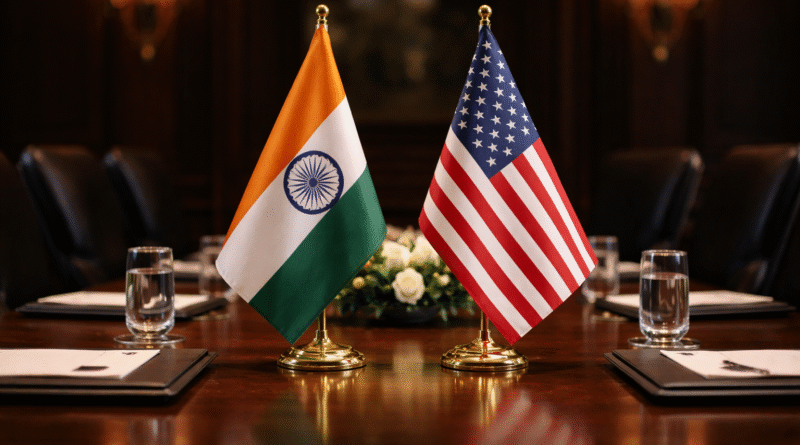
India–US Trade Deal 2026: What India Gave Up, What It Got, and Why It Is Now on Hold
The India–US trade deal 2026 was supposed to be a landmark moment — a new chapter in the world’s most important bilateral relationship. On February 6, 2026, US President Donald Trump announced on Truth Social that a deal had been struck. Prime Minister Modi was hailed as a partner. Tariffs were to be slashed. Half a trillion dollars in trade was promised.
Three weeks later, the US Supreme Court tore up the legal foundation the deal was built on. India paused its negotiating delegation’s trip to Washington. The March deadline for signing came and went. And as of today, the deal exists — but only on paper.
This is the story of how India’s biggest trade negotiation in a decade unravelled, what India actually agreed to, what it got in return, and what happens next.
How It Started: 50% Tariffs and a Diplomatic Crisis
In April 2025, Trump introduced sweeping reciprocal tariffs on nearly every country in the world. India was hit with a 25% reciprocal tariff on its exports to the US. Then in August 2025, Trump went further — he imposed an additional 25% punitive tariff specifically on India, accusing New Delhi of ‘fuelling Russia’s war machine’ by continuing to buy Russian crude oil. That took the total tariff burden on Indian goods to 50% — the highest of any major US trading partner.
The impact was immediate and severe. In Surat — Prime Minister Modi’s home state of Gujarat — 135,000 workers in the gems and jewellery industry were laid off. The seafood and manufacturing sectors faced heavy job losses. India’s exporters, who send roughly 18% of their total exports to the United States, were in crisis.
The February Deal: What Was Actually Agreed
After months of tense negotiations, India and the US announced a framework for an interim trade agreement on February 6, 2026. Here is a clear breakdown:
| Side | What They Claimed Was Agreed |
| US said India committed to | Stop buying Russian oil; $500bn purchase of US goods; reduce tariffs on US industrial and agricultural goods |
| India said it committed to | A broad framework; ‘intends’ to buy American goods; sensitive sectors (dairy, farming, pulses) protected |
| India got in return | Tariffs reduced from 50% to 18%; punitive tariff removed; smartphones, pharma, petroleum exempted |
The Pulses Controversy: A Deal That Was Never Really a Deal
Four days after Trump announced the deal, the White House published a fact sheet listing ‘certain pulses’ — dried legumes — as products where India had committed to reducing tariffs. In India, this crossed a red line. Indian officials said flatly: this was never agreed.
By February 11, the White House quietly revised its fact sheet. The word ‘committed’ was changed to ‘intends.’ A reference to India removing its digital services tax was also removed. As The Diplomat noted: ‘Technically there was never a trade deal. It was a joint statement outlining a broad framework, where both countries’ readouts differed.’
The Supreme Court Ruling That Changed Everything
On February 20, 2026, the US Supreme Court ruled 6-3 in Learning Resources Inc. vs. Trump that Trump had exceeded his authority by using IEEPA emergency powers to impose sweeping tariffs. The legal foundation of Trump’s entire tariff architecture — including the framework the India deal was built on — was struck down.
Within hours, Trump imposed a new 10% global tariff under Section 122 of the Trade Act of 1974 — then raised it to 15%, then revised it back to 10%. The 18% tariff rate India had negotiated was gone. India now faces the same 10% rate as every other country.
Think tank GTRI put it bluntly: ‘India agreed to reduce tariffs for the US based on Washington’s decision to cut reciprocal tariffs on India to 18%. But now the US has reduced the rate for all nations to 10%. Deals are not charity. Both sides must gain. Now, India’s gains need fresh evaluation.’
Full Timeline of the Deal
| Date | What Happened |
| April 2025 | Trump imposes 25% reciprocal tariffs on India |
| August 2025 | Additional 25% punitive tariff — total 50% on Indian goods |
| February 6, 2026 | India-US interim trade framework announced |
| February 9, 2026 | White House fact sheet includes pulses — India objects |
| February 11, 2026 | White House revises fact sheet — ‘committed’ changed to ‘intends’ |
| February 20, 2026 | US Supreme Court strikes down IEEPA tariffs 6-3 |
| February 24, 2026 | New 10% global tariff takes effect under Section 122 |
| March 16, 2026 | India confirms deal on hold pending new US tariff framework |
| July 2026 (expected) | Section 122 tariffs expire — new framework needed |
What India Actually Gained — And What It Conceded
| Category | India Gained | India Conceded |
| Tariffs | 50% wall reduced to 10% for all goods | Committed to $500bn US goods purchase |
| Key exports | Smartphones, pharma, petroleum exempt | Reduced tariffs on US industrial goods |
| Russian oil | No hard commitment to stop purchases | Trump framed deal as stopping Russian oil |
| Negotiating position | Supreme Court ruling strengthens India | Rushed deal before court verdict |
| New risks | — | Section 301 investigations now launched on India |
What Happens Next
The US USTR will complete its new tariff framework by June-July 2026. India’s negotiating team will return to Washington once that framework is legally stable. A finalised interim deal will likely be signed in the second half of 2026.
India’s Commerce Secretary Rajesh Agrawal confirmed on March 16 that India and the US are still engaged, but the deal will only be signed once Washington establishes a stable, legally durable tariff regime. New Section 301 investigations into India — with hearings scheduled for early May 2026 — add further complexity.
ThirdPol’s Take
The India-US trade deal story of 2026 is ultimately a story about the limits of negotiating under pressure. India came to the table facing a 50% tariff wall that was devastating its exporters. The February framework deal looked like a win — until the Supreme Court showed that the wall was legally built on sand.
The lesson for Indian trade negotiators going forward is simple: never agree to anything you would not agree to at a 10% tariff. Because that, it turns out, is what the US can legally impose on everyone.
The good news is that India handled the aftermath well. It did not panic. It did not walk away. It adopted a patient, wait-and-see position and is now negotiating from a stronger legal and strategic footing than it had in February. This patient approach mirrors what India is attempting in its BRICS chairship in 2026 — engaging multiple powers simultaneously without overcommitting to any single relationship. The deal will eventually get done. The question is whether the final text will reflect India’s actual interests — or whether the memory of those 135,000 Surat job losses will push India to accept terms that look good on paper but are not good enough for Indian workers.
Amit Mangal writes on India’s foreign policy and geopolitics at ThirdPol. Follow ThirdPol on X and LinkedIn.
Pingback: Quad Alliance India 2026: What It Is and Can It Survive Trump?
Pingback: India Gulf Diaspora Return: What Happens to Workers Coming Home?
Pingback: India UK Trade Deal 2026: What the FTA Actually Covers - ThirdPol
Pingback: H-1B Visa India 2026: What Trump's Programme Review Means for Indians