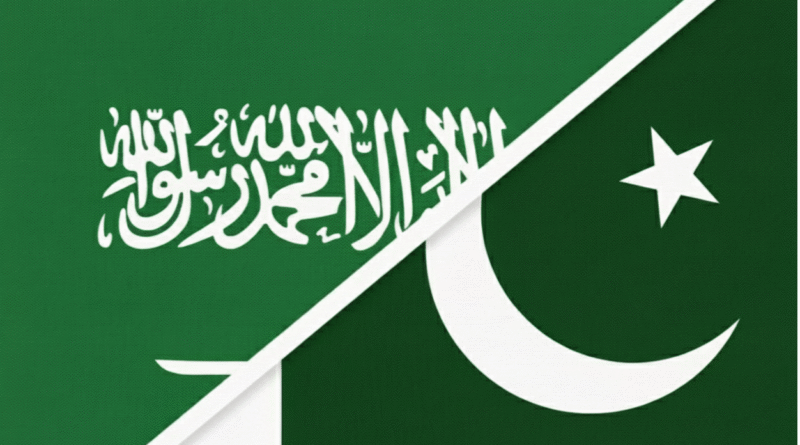
The Saudi–Pakistan Defence Pact: A Risky Bet for Both Sides
This piece examines the Saudi–Pakistan defence pact with a focus on context, history, and regional impact.
The signing of the Strategic Mutual Defence Agreement (SMDA) between Saudi Arabia and Pakistan in September 2025 has been described as a turning point in West Asian security. Crown Prince Mohammed bin Salman and Prime Minister Shahbaz Sharif hailed it as a new chapter. Field Marshal Asim Munir’s presence signalled that Pakistan’s military establishment is central to this partnership. Yet the excitement around the Saudi–Pakistan Defence Pact masks old tensions and new limitations. To understand what this pact really means, it is necessary to look at the history of Saudi–Pakistan defence ties, the present calculations on both sides, and the implications for India.
A History Marked by High Expectations and Deep Friction
Saudi–Pakistani defence cooperation is not new. It began in the early 1950s and deepened in the decades that followed. The high point came between 1979 and 1989 when nearly 20,000 Pakistani troops were deployed in the kingdom. Their mission was both symbolic and strategic. They protected the holy sites and served as insurance against threats from Iran and Yemen.
But this period also exposed the cracks. Saudi leaders saw Pakistani soldiers as hired help rather than partners. Pakistani commanders disliked serving under a foreign chain of command. The exclusion of Shia soldiers from Pakistani contingents created resentment and highlighted sectarian sensitivities.
By 1990, Pakistani troops were pulled out. When Saudi Arabia later faced major crises, including the Iraqi invasion of Kuwait in 1990 and the Yemen conflict in 2015, Pakistan refused direct military participation. It limited its role to defending the holy sites, signalling that the old partnership had hardened into caution.
The American Angle Behind the Agreement
For decades, the United States has shaped the rhythm of Saudi–Pakistan defence ties. Washington’s political and military influence has often pushed the two closer or kept them apart.
The sequence of events leading to the SMDA points to continued American involvement. High-profile meetings in Riyadh, followed by Field Marshal Munir’s unusual meeting with President Trump, show that Washington is still part of the triangle. The SMDA is not simply a bilateral pact. It sits within a broader framework involving American strategic calculations in West Asia and South Asia.
The Atlantic Council provides a detailed assessment of how the Saudi–Pakistan defence pact reflects the Gulf’s wider strategic recalibration.
Why Riyadh Signed the Pact
For Saudi Arabia, the deal is both strategic and circumstantial. Riyadh wanted a formal defence pact with the United States, as well as access to nuclear technology and advanced weapons. Those aims stalled due to regional instability after the 2023 Hamas attack and the Gaza conflict.
The SMDA became the fallback option. It gives Riyadh a partner it can use without inviting domestic pushback or upsetting its position in the Arab world. This makes the Saudi–Pakistan Defence Pact a carefully calibrated compromise.
Several factors shape the Saudi view today:
- Confidence in Self-Defence
Since 1991, Saudi Arabia has managed al-Qaeda attacks, two Gulf wars and the Yemen conflict without foreign armies stationed on its soil. Billions spent on American weapons have strengthened its ability to defend itself. - The Nuclear Question
Pakistan’s nuclear capability adds weight to the partnership, especially if Iran moves closer to a nuclear threshold. But an open nuclear transfer remains unlikely because of Israeli objections and global scrutiny. - China’s Presence in Pakistan
Pakistan’s deep strategic ties with China limit how much influence Riyadh can gain over Islamabad. Saudi Arabia must work within that constraint.
Why Pakistan Joined the Pact
For Pakistan, the agreement is an opportunity. Islamabad is not preparing to fight Saudi Arabia’s wars. Its leaders know Riyadh will not join Pakistan in any confrontation with India or Afghanistan.
Pakistan has three goals:
- Extract economic benefits through financial assistance, oil concessions and military hardware.
- Gain American goodwill by appearing useful in a trilateral framework with Washington and Riyadh.
- Boost military prestige by expanding training missions and showcasing relevance in the region.
This is not equal partnership. Riyadh seeks strategic reassurance. Islamabad seeks political and economic rewards. The Saudi–Pakistan Defence Pact gives Pakistan visibility without binding commitments.
Implications for India
The agreement raises questions for New Delhi. India is the world’s third-largest oil importer and one of Saudi Arabia’s most important economic partners. It is also home to a large Indian diaspora that plays a major role in Saudi Arabia’s workforce and economy.
Since 2014, India and Saudi Arabia have expanded cooperation in defence, energy and intelligence. Riyadh has signalled many times that it does not wish to choose between India and Pakistan. Saudi officials have acknowledged India’s strategic weight and nuclear capability, and reports suggest Riyadh briefed New Delhi about the SMDA beforehand.
For India, the message is clear. The pact is not aimed at India, but it reinforces the need for deeper engagement in West Asia and a careful watch on fast-changing power equations in the region. As the Saudi–Pakistan Defence Pact evolves, India must stay alert to shifts in regional alignments.
For a deeper look at India’s security strategy in the region, see our assessment of India’s Taliban policy.
Conclusion
The Saudi–Pakistan Defence Pact is not a bold new alliance. It is a calculated hedge shaped by history, domestic pressures and great-power politics. The partnership has always been marked by mistrust and asymmetry. Those characteristics remain.
For Riyadh, the SMDA provides reassurance at a time of regional uncertainty. For Pakistan, it offers economic breathing room and geopolitical visibility. But neither side is likely to rely on the other during a real crisis. The agreement is symbolic, not transformational.
—The Analysis Desk at ThirdPol writes on India, its foreign policy, security issues and events shaping the region.
Pingback: Dhurandhar Movie Analysis: Shifting Narrative of Indian Cinema
Pingback: India Bangladesh Relations: Why Strategic Patience Matters Now