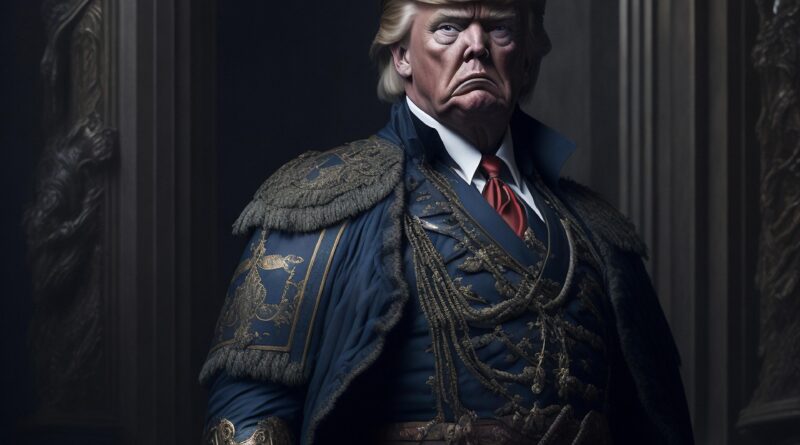
The Donroe Doctrine and the Breakdown of the Global Order
The “Donroe Doctrine” and the Crumbling World Order
A Global Order Losing Its Shape
As 2026 begins, it is hard to escape the feeling that the international system is quietly coming apart. The world built after the Second World War, with its emphasis on rules, institutions, and collective security, no longer functions the way it once did. Multilateralism still exists on paper, but in practice, power politics has returned to the centre of global decision-making.
Countries now act more openly in pursuit of their own interests. Agreements are tested. Norms are stretched. When force is used, accountability is weak or absent. The idea of a shared global order is giving way to competitive multipolarity, where influence often matters more than legality and strength outweighs consensus.
This shift is not sudden, but by 2026 it has become impossible to ignore.
The “Donroe Doctrine” and America’s Return to Hemispheric Control
The year opens with a dramatic move by the United States. Venezuelan President Nicolás Maduro is abducted in an operation framed by Washington as a security necessity. The action is justified as a modern extension of the Monroe Doctrine, signalling a renewed American claim over the Western Hemisphere. This updated approach has come to be described as the “Donroe Doctrine.”
“Donroe Doctrine” seeks to restore uncontested U.S. dominance close to home and position Washington as the sole guarantor of security in the Americas. President Trump’s National Security Strategy released in November 2025 makes this explicit by stating the need to deny external powers any strategic foothold in the region.
Venezuela is not an isolated case of “Donroe Doctrine”. The episode fits into a broader pattern of hemispheric reassertion, accompanied by subtle warnings directed at Cuba, Mexico, Colombia, and even Greenland. What is striking is not only the action itself but the global reaction, or rather the lack of one.
The muted international response suggests that sovereignty norms have weakened considerably. The security architecture established after 1945 no longer restrains major powers in any meaningful way. This sets a dangerous precedent. When one power acts without consequences, others feel emboldened to do the same.
China and Russia are watching carefully. Beijing, in particular, appears more confident about asserting its own regional interests, with Taiwan emerging as the most sensitive and potentially explosive issue. Global politics is slowly shifting toward a world shaped by regional doctrines rather than shared global rules.
West Asia and the Persistence of Instability
West Asia enters 2026 in a deeply fragmented state. Israel’s major military operations in Gaza have paused, but there is little sense that a durable peace is within reach. Violence continues as a constant undercurrent, especially in densely populated and contested areas.
Iran faces mounting internal and external pressure. The regime describes itself as fighting multiple battles simultaneously, including economic warfare, psychological pressure, military threats, and counterterrorism challenges. Unrest inside the country has created an opening that the United States and Israel appear eager to exploit, reviving objectives that remained unfinished in 2025.
Sanctions intensify and covert actions increase, pushing the region further away from de-escalation. The overall trajectory points toward prolonged tension rather than reconciliation.
Fragile States in South and West Asia
In Afghanistan and along the Pakistan border, militant groups regain momentum. The Tehreek-e-Taliban Pakistan and its affiliates threaten an already fragile frontier, increasing insecurity across the region.
Pakistan itself experiences deeper military dominance under Field Marshal Asim Munir, while democratic institutions continue to weaken. Paradoxically, this consolidation of military power coincides with renewed strategic importance for Islamabad in Washington’s calculations. The United States once again views Pakistan as a useful partner, supplying advanced weaponry and reshaping regional power dynamics.
Bangladesh faces its own uncertainty. While elections promise procedural renewal, they do not guarantee political stability. Taken together, West and Northwest Asia resemble a patchwork of local crises, with no effective regional mechanisms to manage conflict or build trust.
China’s Quiet Consolidation of Power
Amid global volatility, China enters 2026 from a position of relative strength. The tariff confrontation with the United States fails to cripple Chinese industry. Instead, Beijing consolidates its role within global supply chains and uses rare earth export controls as a strategic tool.
This approach highlights China’s growing ability to deploy economic statecraft with precision. Its influence expands steadily across Southeast Asia and the Indian Ocean, not through dramatic confrontations but through infrastructure investment, logistics networks, and long-term commercial ties.
Traditional U.S. dominance in the Eastern Pacific erodes gradually, almost unnoticed. Washington now finds itself stretched between reinforcing control in its own hemisphere and countering China’s expanding footprint across the Indo-Pacific.
India’s Strategic Dilemma
India approaches 2026 in an uneasy strategic position. Although it aligns with the United States on several global issues, relations show signs of strain. President Trump criticizes India’s continued imports of Russian oil while simultaneously strengthening ties with Pakistan, creating discomfort in New Delhi.
This shift reduces India’s leverage in West Asian affairs and narrows its diplomatic room for manoeuvre. Mini-lateral initiatives such as I2U2 and the India–Middle East–Europe Economic Corridor continue to move forward, but economic vulnerabilities persist.
China retains a tactical advantage in trade and tariff disputes, limiting India’s ability to hedge between major powers. The improvement in India-China relations following the Tianjin meeting in 2025 helps stabilise tensions but does not generate momentum for deeper trust or cooperation.
Terrorism remains a background threat. While India may avoid large-scale attacks in 2026, the continued activity of groups linked to the Islamic State and al-Qaeda in Africa and West Asia ensures that extremist networks remain adaptive and transnational.
A World Defined by Disorder
The emerging global landscape of 2026 is marked less by institution-building and more by strategic uncertainty. The “Donroe Doctrine” symbolises a decisive shift away from multilateral restraint toward unilateral assertion. As major powers prioritise regional dominance, global legitimacy steadily loses its meaning. For middle powers like India, the challenge is stark. In an environment where power increasingly substitutes for law and regionalism replaces collective security, adaptability becomes essential. The world is not collapsing overnight, but it is undeniably becoming more fragmented, more competitive, and far less predictable