Elon Musk Was on the Modi-Trump Call. Nobody Knows Why. That Is the Problem.
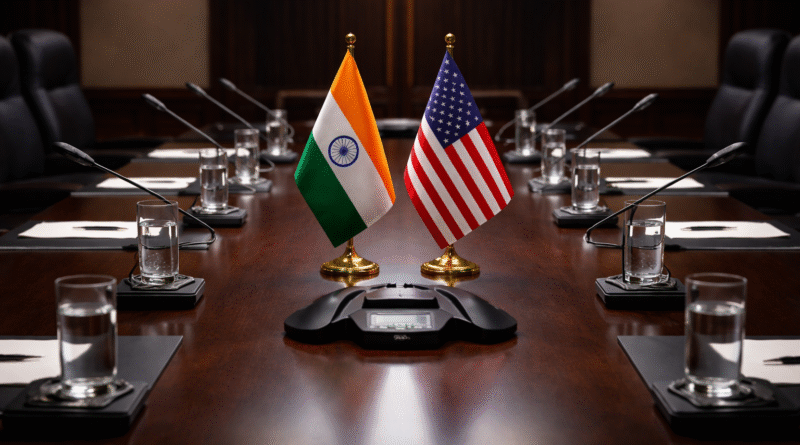
Musk Modi Trump call is everyone talking about. On Tuesday this week, Prime Minister Narendra Modi received a phone call from US President Donald Trump. The two leaders spoke for about forty minutes about the Iran war, the Strait of Hormuz, and India’s energy concerns. Modi posted about it on X. The White House described it as a productive conversation. Everything seemed routine — a wartime diplomatic exchange between two leaders who have a well-documented personal rapport.
Then the New York Times reported something that nobody had mentioned in any official readout. Elon Musk was on the call.
Not as a government official. Not as a security adviser. Not in any formal capacity at all. Just — there. A private citizen, confirmed by two US officials, sitting in on a conversation between the heads of state of the world’s two largest democracies during a wartime crisis. It is unclear whether he spoke. It is unclear why he was there. Neither the White House nor India’s MEA mentioned his presence in their public statements.
That gap between what happened and what was disclosed is the most interesting part of this story.
What We Know
The facts, as confirmed by the New York Times and corroborated by multiple Indian outlets, are straightforward.
Trump called Modi on Tuesday March 25. It was their first direct conversation since the US and Israel launched strikes on Iran on February 28 — nearly four weeks into the war. During the call, Modi pushed for keeping the Strait of Hormuz open, called for de-escalation, and said India supports restoration of peace at the earliest. In his X post, Modi described it as a useful exchange of views.
The White House issued no formal readout. US Ambassador to India Sergio Gor flagged the call on social media first — an unusual move that itself raised eyebrows about the informal nature of the communication.
And Elon Musk, CEO of Tesla, SpaceX and X, former head of the Department of Government Efficiency from which he resigned last year, was on the call. Confirmed by two US officials. Reason unknown.
Why This Is Unusual
Private citizens do not join calls between heads of state. This is not a technicality — it reflects something real about how sensitive diplomatic conversations work. Wartime calls between leaders involve classified intelligence assessments, negotiating positions, and diplomatic commitments that are not meant to be shared beyond a small circle of cleared officials.
The New York Times noted that Musk’s presence was unusual as he no longer holds an official post, and described it as striking given that sensitive matters involving national security are often discussed in such calls.
Musk stepped down from his government role last year after a falling out with Trump. His inclusion on the call suggests the two men have smoothed things over in recent months, with the world’s richest man apparently back on better terms with the president.
But the bigger question is not about their personal relationship. It is about what role a private businessperson plays in a wartime diplomatic call between two nuclear-armed democracies — and what obligations of disclosure that creates.
Why Musk Might Have Been There: Three Theories
Nobody has officially explained his presence. But three plausible explanations have circulated since the story broke.
The first is the Tesla-India angle. Musk has been trying to enter the Indian market for years. Tesla’s expansion into India has been discussed, delayed, and discussed again. The New York Times pointed out that Musk’s business interests intersect with the issues at hand, noting his long-standing interest in expanding commercially in India. If Musk sees the Iran war as an opportunity to move India closer to the US commercially — including through Tesla’s potential market entry — his presence might be about business positioning as much as geopolitics.
The second is the SpaceX-Hormuz angle. SpaceX has been considering an initial public offering that could be affected by global economic instability. A resolution to the Iran war that reopens Hormuz and stabilises global markets is directly in SpaceX’s financial interest. Musk might have been on the call to advocate for a faster push toward ceasefire terms.
The third is simply that this is how the Trump administration works. Musk has operated as an informal senior adviser to Trump even after leaving his formal role. His presence on the Modi call may reflect nothing more than the fact that Trump likes having him around and does not always distinguish between formal and informal diplomatic contexts.
None of these explanations is particularly reassuring from a governance standpoint.
What Modi Discussed — And What He Got
Strip away the Musk angle and the substance of what Modi raised on the call deserves attention on its own terms.
Modi underlined the importance of ensuring that the Strait of Hormuz remains open, secure and accessible, calling it vital for global peace, stability and economic wellbeing. He called for de-escalation and said India supports restoration of peace at the earliest.
This was India’s first direct engagement with Trump at the leader level since the war began on February 28. That is four weeks of war, a closed Hormuz, an LPG crisis hitting 330 million Indian households, an energy price shock, and a petrol excise duty cut announced yesterday — all without a single Modi-Trump conversation.
The fact that Trump called Modi — rather than Modi requesting the call — is worth noting. It suggests Washington wanted something from New Delhi in this conversation, not just the other way around. Whether that was Indian diplomatic support for the emerging peace framework, reassurance about Indian purchasing commitments, or something related to Musk’s business interests is not yet clear.
What Modi got publicly is limited — a vague agreement to stay in touch regarding efforts towards peace and stability. That is diplomatic language for: nothing was resolved, but we are talking.
What This Means for India
There are three implications worth thinking through carefully.
The first is process. India’s diplomatic conversations with Washington are now happening in a format where a private billionaire may be present. India’s MEA did not disclose this. The White House did not disclose this. Two unnamed US officials told the New York Times. India has no way of controlling who sits in on Trump’s side of a phone call — but it does have a legitimate interest in knowing who is listening to its Prime Minister discuss wartime energy security.
The second is leverage. Musk’s presence actually gives India something it can use. If Tesla wants to enter India, if SpaceX wants favourable regulatory treatment, if Musk’s other businesses want access to the Indian market — all of that is now on the table as part of the broader India-US relationship. India has successfully leveraged Apple’s manufacturing expansion, semiconductor investment commitments, and defence co-production to extract concessions from Washington. Musk’s business ambitions in India are another card to play.
The third is what it signals about Trump’s approach to diplomacy. Modi and Trump are expected to meet in person later this year, and many expect Musk to be part of those future trade and security negotiations. If that is true, India needs to think carefully about how it manages a bilateral relationship where a private business figure is a structural participant in diplomatic conversations.
India has navigated complicated great power relationships before. Managing the Musk variable in the Trump-India dynamic is a new challenge — but not necessarily an impossible one.
ThirdPol’s Take
The Musk-on-the-call story is being treated by most Indian media as a curiosity — an interesting footnote to the Modi-Trump conversation. It deserves more serious attention than that.
Democratic accountability requires that citizens know who is participating in decisions that affect them. When a private citizen with enormous business interests sits in on a wartime call between the Prime Minister of India and the President of the United States — and neither government discloses this in their official communications — that is a governance question, not just a gossip item.
India’s foreign policy establishment is sophisticated enough to manage this. But it needs to ask itself directly: what exactly was Elon Musk doing on that call, what did he hear about India’s position on the Iran war and the Strait of Hormuz, and how might he use that information in his business dealings with India and with Iran-adjacent markets?
Those are not paranoid questions. They are exactly the questions that India’s MEA should be asking the State Department right now — quietly, diplomatically, and firmly.
The call itself was overdue and necessary. The Hormuz message was right. The de-escalation call was right. But India should be having this conversation on its own terms — not on a call where the guest list has not been disclosed.
Amit Mangal writes on India’s foreign policy and geopolitics at ThirdPol. Follow ThirdPol on X and LinkedIn.