India Sri Lanka Relations 2026: How New Delhi Saved Colombo From a Fuel Crisis in Four Days
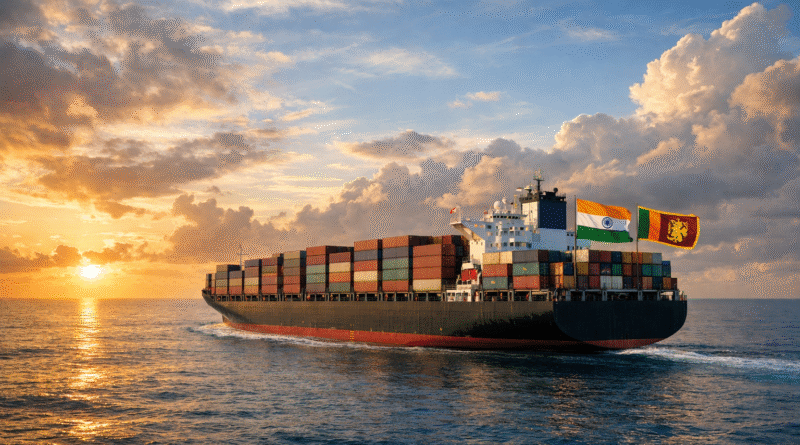
India Sri Lanka relations 2026 got a quiet but significant boost on March 28 when a ship carrying 38,000 metric tonnes of petroleum docked at Colombo port, arranged in four days after contracted suppliers from West Asia failed to deliver because of the Iran war.
India did not announce it in advance. It did not hold a press conference. It sent the fuel, the ship docked, and the Sri Lankan president said thank you on social media.
That is Neighbourhood First diplomacy working exactly as it is supposed to work.
But the story behind this quiet act of regional leadership is more interesting than the headline and it has implications that go well beyond India and Sri Lanka.
What Actually Happened
Sri Lanka was facing an emerging fuel crisis of its own. The Iran war closed the Strait of Hormuz, disrupting supply chains across Asia. Sri Lanka, which imports virtually all of its petroleum requirements, saw its contracted West Asian and Singaporean suppliers declare force majeure or simply fail to deliver.
Sri Lankan President Dissanayake called Prime Minister Modi on March 24. The two leaders discussed the energy crisis and Modi committed to helping. Four days later, a 38,000 metric tonne petroleum shipment arrived at Colombo. Dissanayake’s thank you post specifically said the shipment followed his March 24 call with Modi — a deliberate acknowledgement of the speed and directness of India’s response.
For a country that was bankrupt just three years ago, that took a $2.9 billion IMF bailout to stay afloat, that handed China’s state company a 99-year lease on Hambantota port in exchange for debt relief — the image of India arriving with fuel when nobody else could deliver is not just a diplomatic win. It is a strategic repositioning of the entire India-Sri Lanka relationship.
Why This Matters Beyond the Fuel
Sri Lanka’s 2022 economic collapse was one of the most dramatic in recent history. The country ran out of fuel, medicine, and foreign exchange simultaneously. Massive protests forced President Gotabaya Rajapaksa to flee. The new government under Dissanayake has been trying to rebuild the economy through the IMF programme and careful management of foreign relationships.
During the 2022 crisis, India was the first country to step in with credit lines, essential goods, and diplomatic support. China, which had lent Sri Lanka billions under the Belt and Road Initiative, was conspicuously unhelpful during the actual emergency — the debt was real, the crisis support was not. That contrast has not been forgotten in Colombo.
The March 28 fuel shipment is a continuation of the same pattern. When the Iran war created a supply crisis that cut Sri Lanka off from its normal sources, India moved in four days. It did not ask for anything publicly in return. It just sent the fuel.
This is how influence actually works. Not through press releases or summit declarations — through showing up when it matters.
The Neighbourhood First Policy in Practice
India’s Neighbourhood First policy was articulated early in Modi’s first term and has been the stated framework for India’s regional diplomacy ever since. The theory is straightforward prioritise India’s immediate neighbours, build deep economic and security relationships, and ensure that India is the partner of choice when regional countries face crises.
The practice has been messier. The 2015 economic blockade of Nepal — which India denied but which most Nepalis blamed on New Delhi — set back the relationship by years. India’s handling of the Maldives under Muizzu’s presidency was initially clumsy. The relationship with Bangladesh has deteriorated sharply since Hasina’s ouster.
But the Sri Lanka fuel shipment is Neighbourhood First at its best. It is fast, practical, non-transactional in its immediate presentation, and strategically timed to reinforce India’s position as the reliable partner China has repeatedly failed to be.
The China Comparison
This point deserves direct attention because it is central to understanding why the fuel shipment matters strategically.
China lent Sri Lanka approximately $7 billion under the Belt and Road Initiative. When the debt became unpayable, China restructured rather than forgave and extracted Hambantota port on a 99-year lease as part of the arrangement. When Sri Lanka ran out of fuel and medicine in 2022, China offered words of sympathy and limited emergency credit. India offered credit lines, essential goods, food, medicine and fuel.
The question Sri Lanka’s policymakers are constantly weighing is which partner is actually reliable in a crisis. The March 28 shipment adds another data point to that calculation. It is not that China is irrelevant to Sri Lanka — the infrastructure investment is real and the economic relationship is significant. But reliability in a crisis is a different thing from investment in good times. India is building a record of the former that China has not matched.
India increased its foreign aid to Sri Lanka to Rs 400 crore in the 2026-27 budget — up from Rs 317 crore the previous year. The fuel shipment sits on top of that. It is a consistent pattern of deepening engagement rather than a one-off gesture.
What This Means for India’s Regional Position
India’s handling of the Sri Lanka fuel crisis also needs to be read against the backdrop of everything else happening in India’s neighbourhood right now.
Nepal has a new government led by a Gen Z Prime Minister who has nationalist credentials and a complicated history of anti-India statements. Bangladesh’s relationship with India has deteriorated badly. The Maldives is in the middle of a careful diplomatic recalibration after Muizzu’s China pivot. Myanmar is consumed by civil conflict.
In that context, Sri Lanka stands out as the one neighbourhood relationship that is genuinely working well. Dissanayake’s government has been cooperative, the post-2022 crisis relationship has been managed carefully, and the March 28 fuel shipment reinforces India as the indispensable partner for a small island nation with limited options.
That matters for India’s broader regional credibility. After the complicated year India has had the Iran war silence, the Chabahar exit, the Modi-Israel visit optics, the questions about Global South leadership — the Sri Lanka response is a reminder that India’s Neighbourhood First policy can produce genuinely good outcomes when it is executed with speed and without conditions.
The Irony Worth Noting
There is one irony in this story that deserves mention.
India itself is facing a fuel shortage caused by the same Iran war. India’s LPG crisis hit 330 million households. India invoked the Essential Commodities Act. India cut petrol and diesel excise duty to protect consumers from price shocks. India’s oil marketing companies are losing money on every litre they sell.
And while all of this is happening domestically, India found 38,000 metric tonnes of petroleum to ship to Sri Lanka in four days.
That is a deliberate strategic choice. India could have said we are managing our own shortage, we cannot spare fuel for neighbours right now. It did not. It prioritised the regional relationship even during its own supply stress. That decision will be remembered in Colombo longer than any number of bilateral summits.
ThirdPol’s Take
India did something genuinely good here and it is worth saying so plainly. Too much foreign policy commentary including on ThirdPol focuses on India’s failures, its silences, its contradictions. The Sri Lanka fuel shipment is a success and it deserves to be recognised as one.
It is not a coincidence that India responded in four days. It is the result of a relationship built carefully over the past three years the 2022 crisis support, the credit lines, the food shipments, the diplomatic engagement with successive Sri Lankan governments. When Dissanayake called Modi on March 24, the infrastructure of trust was already there. The fuel followed because the relationship was already doing its work.
This is what Neighbourhood First looks like when it works. Not grand announcements or summit declarations but a phone call on March 24 and a ship in Colombo harbour on March 28.
The measure of a regional power is not how it behaves in good times. It is how it behaves when its neighbours are in trouble and it is under stress itself. By that measure, India’s response to Sri Lanka’s fuel crisis is one of the better things its foreign policy has produced in 2026.
Amit Mangal writes on India’s foreign policy and geopolitics at ThirdPol. Follow ThirdPol on X and LinkedIn.