India LPG Shortage and the Iran War: Why 330 Million Households Are Running Dry
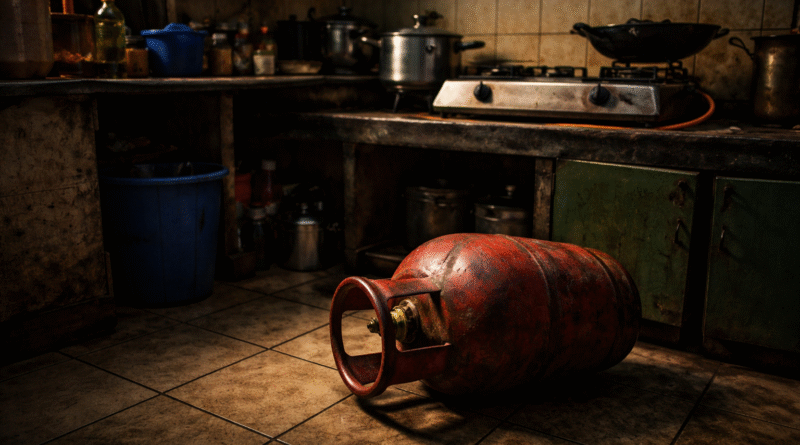
The India LPG shortage, triggered by Iran’s effective closure of the Strait of Hormuz since February 28, has arrived not in headlines but in empty gas cylinders, shuttered restaurants, and altered recipes. India imports roughly 65 percent of its LPG requirements — and about 90 percent of those imports pass through a single narrow waterway that is now, for all practical purposes, closed. For 330 million Indian households, the Iran war is no longer a distant news story. It is a cooking problem.
There is a small tea stall in Jaipur that has been serving the same spiced chai for over two decades. The owner, Chetan Singh, knows the recipe by heart. Same spices, same milk ratio, same flame. Regulars line up every morning not just for the tea — but for that specific taste.
This week, the chai does not taste the same.
Singh has been forced to switch to an induction stove. The gas cylinder that powered his kitchen for years is running out, and the next one is not coming anytime soon. “We are boiling chai on the induction top but it’s not the same,” he said. “It doesn’t get the same flavour.” His iconic bun butter and samosas — the items people queue up for — are off the menu entirely.
He is not alone. Across India — from Mumbai’s dosa restaurants to Tamil Nadu’s hotel rows to Delhi’s street food corners — the Iran war has arrived quietly, in the shape of an empty gas cylinder.
A War 3,000 Kilometres Away Is Emptying India’s Kitchens
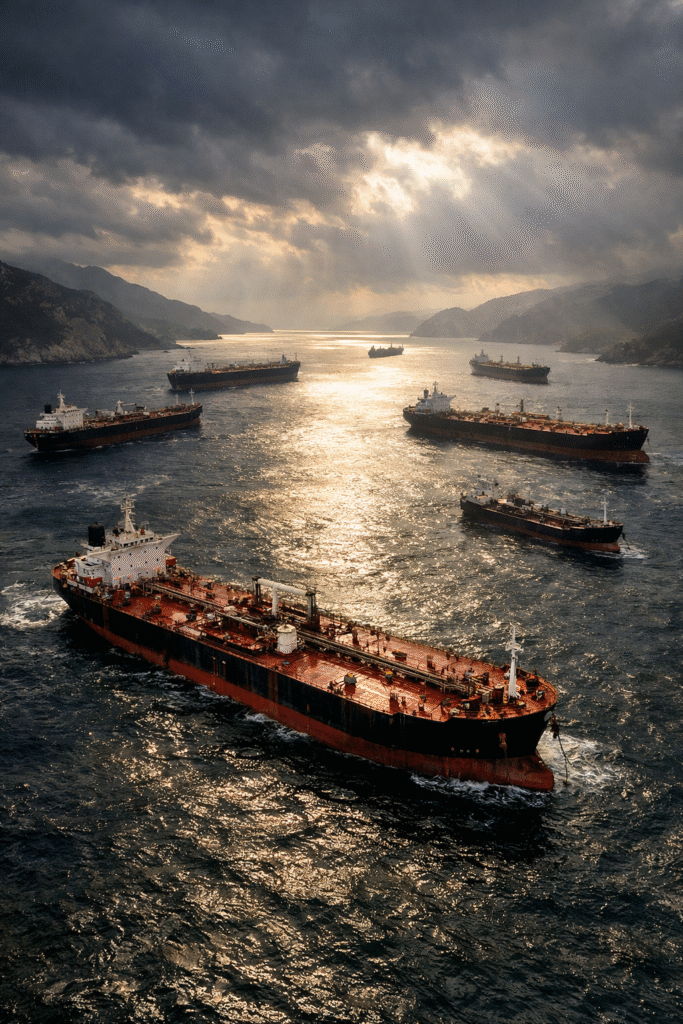
The numbers are staggering when you sit with them. Since the US-Israel military offensive against Iran began on February 28, Iran has effectively shut the Strait of Hormuz — the narrow waterway through which roughly 20 percent of the world’s oil and natural gas normally passes. As of March 18, only 21 tankers have managed to transit the route since the conflict began, compared to more than 100 ships daily before the war. Around 400 vessels are currently anchored in the Gulf of Oman, waiting.
For India specifically, the impact has been acute. Twenty-two Indian-flagged vessels — including six LPG carriers, one LNG tanker, and four crude oil tankers — remain stuck in the Persian Gulf. Shell and TotalEnergies have declared force majeure, freeing themselves from contractual supply obligations. Qatar, one of India’s biggest LPG suppliers, has halted LNG exports entirely.
Back home, the consequences are visible. Residents in several cities have been queuing outside gas distribution centres since 3 AM. In Gujarat’s Morbi — the world’s second-largest ceramic tile hub — 450 out of 670 factories have shut down. In Maharashtra, about 30 to 35 percent of hotels and restaurants are closed. The Chennai Hotel Association has warned that nearly 10,000 establishments across Tamil Nadu are on the verge of shutting down.
Even Infosys — India’s second-largest IT firm, employing over 300,000 people — has trimmed its cafeteria menus and asked staff to bring food from home.
This is what it looks like when geopolitics hits ground level.
The Government Is Rationing — And People Are Noticing
On March 11, India’s Ministry of Petroleum and Natural Gas invoked emergency powers. Oil refineries were directed to prioritise LPG supply to the 333 million households that use it as a primary cooking fuel, and to cut off the 3 million businesses relying on commercial cylinders. In a further step, the government barred consumers with piped natural gas connections from retaining or refilling domestic LPG cylinders — a measure designed to free up supply for those with no alternative.
The price of a 14.2 kg domestic cylinder has been raised by ₹60. The 19 kg commercial cylinder is now ₹144 more expensive. Analysts warn these hikes are still far below what a full cost pass-through would look like if oil stays above $100 a barrel.
Enforcement has turned aggressive. Across the country, 12,000 raids have been conducted on suspected hoarders. Over 15,000 cylinders have been seized. Oil companies have carried out 2,500 surprise inspections of LPG dealerships. In Chhattisgarh alone, 741 cylinders were recovered from 102 locations in a single crackdown.
Here is the uncomfortable political reality beneath all of this: five Indian states — Assam, Tamil Nadu, Kerala, West Bengal, and Puducherry — are heading to polls in the first half of 2026. The price of cooking gas has historically been one of the most politically sensitive numbers in Indian elections. Opposition parties have already pounced — RJD, AAP, and DMK have all made the LPG shortage a political issue in Parliament and on the streets. The government knows this. Every move it makes on LPG pricing is being watched through both an economic and an electoral lens.
That is not a conspiracy. That is just how democracy and energy economics collide.
What Modi Did When the Strait Closed
For weeks after the war broke out, India maintained diplomatic silence toward Tehran. Then Iran’s new supreme leader declared the Strait would remain closed. Within hours, Prime Minister Modi picked up the phone and called Iranian President Masoud Pezeshkian — his first direct call to Iran since the conflict began. Foreign Minister Jaishankar had already been working multiple back channels, holding several conversations with his Iranian counterpart about ship safety and energy access.
The diplomacy produced a result. Two state-owned Indian tankers — the Shivalik and the Nanda Devi — were granted safe passage by Tehran. The Shivalik arrived at Mundra Port in Gujarat on March 16. The Nanda Devi followed shortly after. Combined, they carried 92,712 metric tonnes of LPG — enough to ease but not resolve the shortage.
The foreign ministry was careful not to oversell it. When asked whether Indian ships would receive regular passage going forward, the spokesperson said anything further would be “premature.” That single word told you everything about how uncertain the situation remains.
Negotiations are continuing. India is currently in talks with Tehran specifically about safe passage for six more LPG tankers carrying a combined 270,000 tonnes of cooking fuel — enough to provide meaningful relief if it comes through.
The situation on the water remains tense. Since the war began, only 21 tankers have transited the strait versus over 100 daily before. A China-owned vessel broadcasting its affiliation was struck by shrapnel near Jebel Ali on March 12, which has since deterred most Chinese transits. Greek and Pakistani vessels have made occasional crossings. The strait is not open — it is leaking, drop by drop.
The Economic Damage Is Already Spreading
Before this crisis, India’s economic story was unusually optimistic. The government was projecting GDP growth of up to 7.2 percent. The Reserve Bank of India’s governor had called the outlook a “Goldilocks scenario.” Interest rates were expected to stay stable.
That comfort is eroding fast. Citi has estimated an upward inflation risk of 50 to 75 basis points from oil prices alone. If crude holds around $90–$100 per barrel, petrol and diesel prices could rise by ₹5 to ₹10 per litre — adding up to another 50 basis points to consumer inflation. Nomura has warned of “multiple sources of inflationary pressure” if supply disruptions persist beyond a month.
The rupee is under pressure. India’s current account deficit is widening. Goldman Sachs has warned that India has a “much lower” inventory cushion than comparable Asian importers.
India has roughly 25 days of strategic petroleum reserves. The Hormuz strait handles 20 percent of global oil trade. Those two numbers together define India’s energy vulnerability more clearly than any policy document.
India was in a good place economically. It did not start this war. It has no stake in the US-Israel-Iran conflict. And yet it is absorbing the shockwaves of a crisis it had no hand in creating.
The Deeper Problem: India Tied Its Cooking Fuel to One Chokepoint
This specific crisis will pass. The strait will eventually reopen — analysts estimate partial normalisation is already beginning. Supply chains will restabilise. The chai in Jaipur will eventually taste the same again.
But the structural vulnerability that allowed this crisis to happen will remain unless India chooses to address it seriously.
Roughly 54 percent of India’s normal LPG availability is directly exposed when the Hormuz corridor shuts. That is not a marginal risk. That is an existential supply risk for a fuel that 332 million households depend on to cook their daily meals.
India has already taken early steps. A 2.2 million tonne per annum deal for US LPG was in place for 2026, covering about 10 percent of annual imports. Alternative sourcing from Norway, Canada, and Russia is being explored. Induction stove sales have surged — a quiet, spontaneous signal that households are already hedging against the next crisis.
Over the longer term, the answer is structural diversification: more piped natural gas in cities, more electric cooking infrastructure, more compressed biogas plants, and critically — more storage terminals that can hold 45 to 60 days of LPG supply rather than the current 25. The Cape of Good Hope route around Africa is already being explored as an alternative supply corridor, adding 10 to 14 days to shipping times but bypassing Hormuz entirely.
The crisis has done something years of policy discussions could not — it has made the abstract urgency of energy security feel personal. When your chai tastes wrong, the geopolitics stops being distant.
ThirdPol’s Take
India did not deserve this crisis. But it is being forced by it to confront a reality that strategic planners have long flagged: you cannot run the world’s most populous country on a single supply corridor for a welfare-essential fuel.
The Hormuz crisis is not just a short-term energy shock. It is a stress test of India’s foreign policy independence, its economic resilience, and the government’s ability to protect ordinary citizens from decisions made in Washington and Tehran.
India has passed the early part of the test — the emergency rationing prioritised households correctly, the diplomatic outreach to Iran was measured and produced results, and the government has moved quickly on enforcement.
But the harder question is what comes after. Will India build the energy infrastructure and supply diversity that makes the next Hormuz closure a manageable disruption rather than a national crisis? The six LPG tankers currently in negotiation for safe passage are a short-term fix. The 25-day reserve buffer is a structural problem.
The next crisis is not a matter of if. It is a matter of when.
Amit Mangal writes on India’s foreign policy and geopolitics at ThirdPol. Follow ThirdPol on X and LinkedIn.
Pingback: BRICS 2026 India Explained: What It Is and Why India Chairs It
Pingback: India Energy Security and the Iran War: The Crisis That Was Always Coming
Pingback: Chabahar Port India 2026: The $370 Million Bet At Risk