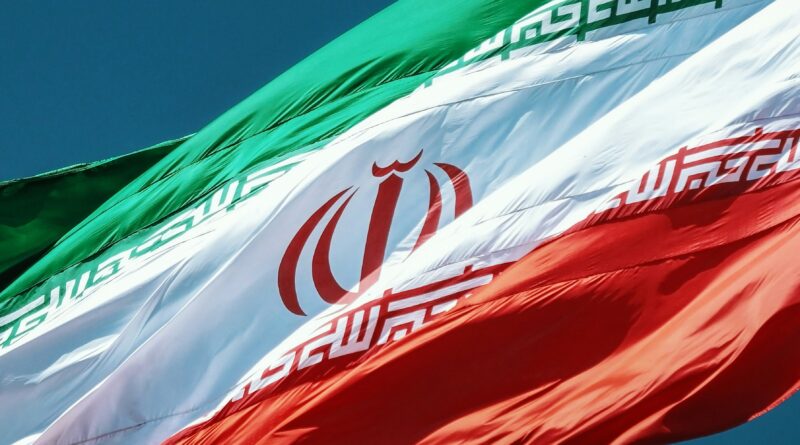
India and the Iran War 2026: Energy Crisis, Neutrality Dilemma, and the Gulf Diaspora Return
By Amit Mangal | ThirdPol | April 1, 2026
When the United States and Israel launched Operation Epic Fury on February 28, 2026, targeting Iran’s nuclear infrastructure and military leadership, New Delhi watched with a familiar anxiety. India had been here before: a war it did not start, a conflict it could not afford to ignore, and a foreign policy that demands it take no sides. But this time, the stakes are higher. The 2026 Iran war has triggered India’s worst domestic energy shock in decades, sent over 220,000 Indian nationals fleeing Gulf cities, and handed rival Pakistan an unlikely diplomatic spotlight. For India, this is not just a West Asian war. It is a test of strategic autonomy at its most expensive.
The Strait of Hormuz and India’s Energy Nightmare
Iran’s decision to close the Strait of Hormuz following the US-Israeli strikes set off a cascade that landed directly in Indian kitchens. Roughly 90 percent of India’s Liquefied Petroleum Gas (LPG) imports pass through the strait. Within days of the closure, LPG cylinder prices rose sharply, and long queues appeared outside distribution centres across the country. Black market prices for a 14.2 kg cylinder surged beyond Rs 4,000. The government permitted hotels and restaurants to temporarily use biomass as fuel, an admission of just how constrained supplies had become.
Oil markets reacted swiftly. Brent crude climbed from around $80 per barrel on March 2 to over $120 by March 9. The EY Economy Watch report has warned that India’s real GDP growth for the next fiscal could be eroded by approximately one percentage point, while retail inflation could rise by around 1.5 percentage points if the conflict drags on. Employment-intensive sectors such as textiles, chemicals, fertilisers, and cement face direct exposure. The broader message from economists is stark: India’s growth story is not immune to West Asian conflict.
To manage the immediate crisis, the US Treasury granted India a temporary 30-day emergency waiver on March 6, allowing the purchase of stranded Russian oil cargoes at discounted rates. It was a short-term relief valve, not a solution. India still relies on the Gulf corridor for energy, and no amount of Russian oil diversification can fully substitute for unimpeded access to the Strait of Hormuz.
Strategic Neutrality: Principled or Paralysed?
India’s official position has been cautious and carefully worded. The Ministry of External Affairs expressed concern and called for a ceasefire, without naming either the United States or Iran as aggressors. Prime Minister Modi spoke with Gulf leaders, including King Abdullah II of Jordan, King Hamad of Bahrain, and Crown Prince Mohammed bin Salman of Saudi Arabia, condemning strikes on sovereignty without specifying whose sovereignty. He also spoke with Israeli Prime Minister Benjamin Netanyahu. The Indian National Congress, led by Rahul Gandhi, described Modi’s foreign policy as a “joke,” particularly after Pakistan, Egypt, and Turkey emerged as the primary back-channel mediators between Washington and Tehran.
That development stung. India, which has worked hard to project itself as the Vishwaguru of the Global South and an indispensable diplomatic voice, was conspicuously absent from the mediation table. Pakistan, which India has spent years trying to isolate diplomatically, stepped into a role New Delhi might otherwise have occupied. The Wire described it as a “stinging strategic setback,” noting that for a government that has built its foreign policy brand on projecting Modi as a global statesman, Pakistan’s emergence as a credible interlocutor was “nothing short of a political and diplomatic catastrophe.”
Modi subsequently signalled that India was in contact with all relevant parties to work towards a “peaceful solution as soon as possible.” But the damage to the optics of strategic autonomy had already been registered.
220,000 Indians Leave the Gulf: The Human Dimension
Numbers tell part of the story. As of late March 2026, over 220,000 Indian nationals have been repatriated from Gulf Cooperation Council countries and Iran as a result of the escalating conflict and the Hormuz blockade. This is not a temporary evacuation of tourists. A significant portion are skilled professionals and business owners who had built lives in the UAE, Qatar, Kuwait, and Bahrain over decades.
What happens when they return matters enormously. Economic data from March 2026 indicates that returnees are not heading to Mumbai or Delhi in large numbers. They are gravitating toward Tier-2 and Tier-3 cities, driving a 14 percent growth in secondary real estate markets. Remittance flows, which have long subsidised household consumption in states like Kerala, Andhra Pradesh, and Uttar Pradesh, are falling. The government faces a dual pressure: declining foreign exchange inflows from remittances on one side, and rising import costs from energy disruption on the other.
This “reverse migration” is not entirely negative. Returnee capital, skills, and entrepreneurial experience could seed new businesses in smaller cities if channelled well. But that requires state-level infrastructure and policy preparedness that is not yet in place at the scale needed.
Chabahar: The Port India Quietly Abandoned
One of the quieter casualties of the Iran war has been India’s Chabahar port project. For years, Chabahar was India’s flagship connectivity initiative: a deepwater port on Iran’s southern coast that gave India a sea-land route to Afghanistan and Central Asia, bypassing Pakistan entirely. The 2026-27 Union Budget allocated zero rupees to Chabahar, down from approximately Rs 3,600 crore in the previous cycle.
The abandonment was predictable. Any credible trade deal with the United States required India to wind down its Iran exposure, and Chabahar, however strategically valuable, was a liability in that negotiation. The question India has not yet answered publicly is what replaces Chabahar as the route to Central Asian markets. Without it, India’s connectivity ambitions in that region become significantly harder to execute.
India’s BRICS Chairmanship in the Crossfire
India holds the BRICS chair in 2026 and had planned to use the presidency to reinforce its credentials as a leader of the Global South. The Iran war has complicated that agenda considerably. BRICS includes Russia and China, both of which have been critical of the US-Israeli strikes. India, which needs to balance its BRICS commitments with its deepening strategic relationship with Washington, is again caught in the middle.
The de-dollarisation agenda within BRICS, which the Trump administration has publicly opposed, is another pressure point. India has already been trying to quietly downplay that element of the BRICS agenda. The Iran war has made the balancing act harder. Xi Jinping may visit India for the BRICS summit later this year. Whether that summit produces substantive outcomes, or merely a set of carefully hedged communiques, will say a great deal about how much diplomatic space India has left to manoeuvre in.
ThirdPol’s Take
India’s response to the Iran war reveals the structural limits of strategic autonomy. When a conflict touches your energy supply, your diaspora, your trade routes, and your neighbourhood simultaneously, the luxury of principled non-alignment gives way to very practical pressures. India has managed the immediate crisis reasonably well: securing oil waivers, repatriating citizens, and keeping diplomatic channels open with all sides. But the medium-term challenges are harder. Falling remittances, rising energy costs, a lost connectivity project in Chabahar, and the embarrassment of Pakistan playing mediator while India watches from the sidelines: these are not problems that careful statements resolve. They require strategic decisions about which partnerships India is actually willing to prioritise, and at what cost. The Iran war will not define India’s foreign policy permanently, but it is forcing a clarity that New Delhi has long tried to avoid.