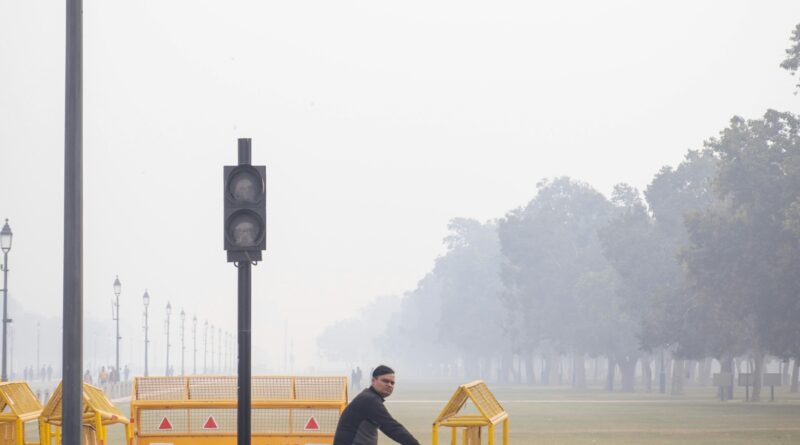
Delhi’s Air Pollution Crisis and the Need for Real Solutions
Every winter, Delhi sinks into a familiar haze. Schools shut down, flights are disrupted and residents brace themselves as AQI levels climb beyond 400. This crisis returns with such regularity that it is treated as a seasonal inconvenience. In reality, the Delhi air pollution crisis is a chronic public health emergency as highlight by World Health Organisation and a structural failure that has gone unresolved for decades.
A Structural Crisis That Repeats Itself
Decades of meetings, advisories and expert panels have done little to improve Delhi’s air. Long-term exposure to toxic air is cutting life expectancy by nearly ten years in parts of the NCR. Economic losses are enormous. Studies estimate that pollution costs India more than 36 billion dollars annually. Yet governments often fall back on short-term measures such as cloud-seeding or installing purifiers in selected buildings. Geography makes the problem harder. Delhi sits in a natural basin. The Aravalli hills block air movement and winter’s temperature inversion traps pollutants close to the ground. The city becomes a bowl of stagnant, poisonous air. Cities such as Los Angeles once faced similar conditions but responded with strong laws, clean technology and enforcement. Delhi is yet to take that scale of action.
Human Decisions That Make the Crisis Worse
Pollution levels are not shaped by nature alone. Human choices worsen the problem daily. The NCR’s vast vehicle population continues to emit nitrogen oxides and PM2.5. Enforcement of BS-VI norms is weak. Construction dust, which contributes more than a quarter of particulate pollution, spreads freely because regulations are widely ignored. Industries in neighbouring states release sulphur dioxide and other pollutants using outdated equipment. Stubble burning in Punjab and Haryana remains widespread. Farmers have few practical alternatives despite subsidies and court directions. Seasonal practices such as firecrackers during Deepavali and open waste burning create additional spikes. Delhi’s air crisis is a classic wicked problem. It is multi-layered, cross-border and deeply political. It cannot be solved by scattered interventions.
A Rare Opportunity for Political Coordination
For the first time in years, Delhi and the surrounding NCR states Haryana, Uttar Pradesh and Rajasthan share the same political alignment as the central government. This creates an unusual opportunity. There is space to reduce friction between governments and launch a coordinated Clean Air Mission with shared responsibility.
Global examples offer a blueprint. London set up an Ultra Low Emission Zone, modernised transport and improved building efficiency. Los Angeles enforced tough vehicle-emission standards and encouraged clean fuels. Beijing went further. After its airpocalypse, it shifted industries, restricted coal use and introduced real-time monitoring. The result was a 35 percent reduction in PM2.5 levels within five years.
Delhi needs a similar approach. A Unified Airshed Management Plan can treat NCR as one pollution zone. This should include real-time public dashboards, a large-scale move to electric public transport and strict enforcement of construction and waste norms. Farmers need access to machinery such as Happy Seeders and viable use of bio-decomposers so that burning crop residue is no longer the cheapest choice.
A Behavioural Challenge Too
Policy alone will not fix the crisis. Air pollution is also a behavioural issue. Citizens must see clean air as a shared responsibility. Schools, local communities and public campaigns can build awareness and foster habits that reduce pollution. Without this shift in attitude, even the best policies will fall short.
Conclusion
Delhi’s air emergency is not inevitable. It is the product of delayed action, fragmented governance and choices made every day. Treating it as a winter nuisance guarantees continuing illness, economic loss and environmental decline.
But seeing it for what it is a structural problem that demands sustained, coordinated action offers hope. Delhi can breathe again. The question is not whether solutions exist. It is whether all of us governments, institutions and citizens are ready to act with the urgency the crisis demands
The Analysis Desk at ThirdPol writes on India, its foreign policy, security issues and events shaping the region.