Nepal’s Rapper PM and India: Why Balen Shah’s Rise Should Have New Delhi Paying Close Attention
Six months ago, a 35-year-old rapper was making music in Kathmandu. Today Balen Shah Nepal PM is the face of country’s Gen Z.
Balendra Shah known as “Balen” swept to power in Nepal’s March 5 election after his party, the Rastriya Swatantra Party, won in a landslide that fell just two seats short of a two-thirds majority in parliament. The three traditional parties that had dominated Nepali politics for decades — the Communist Party, the Nepali Congress, and KP Sharma Oli’s UML were routed. Former PM Oli, a veteran politician who had held the top job three times, lost in his own constituency.
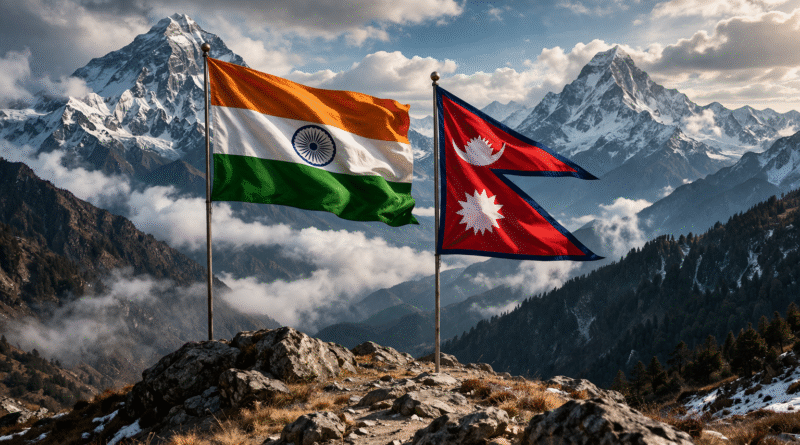
Nepal has seen political earthquakes before. But this one is different. And for India, sitting on Nepal’s southern border with a relationship that is simultaneously its most important and most fraught in South Asia, Balen Shah’s rise creates a set of questions that do not have easy answers.
How the Revolution Actually Happened
The story starts not with an election but with a hashtag.
In September 2025, Nepal’s government led by KP Sharma Oli — made a decision that proved catastrophically miscalculated. It banned 26 social media platforms, apparently in response to a viral trend called “#NepoBaby” in which young Nepalis were posting content satirising the lavish lifestyles of politicians’ children at a time when the average annual income in Nepal was just $1,400.
Rather than kill the movement, the ban inflamed it. The movement escalated into a full-scale revolution that claimed at least 76 lives in just two days and fundamentally altered Nepal’s political trajectory. Attacks on police stations and government buildings intensified. Army was deployed. A nationwide curfew was imposed.
Then something genuinely unprecedented happened. Over 10,000 users on a “Youth Against Corruption” forum chose Sushila Karki Nepal’s Chief Justice to succeed Oli as interim Prime Minister through an online democratic exercise on Discord. She was sworn in. Elections were called for March 5, 2026.
The September 2025 protests were triggered by the government’s banning of 26 social media platforms in an evident response to the ‘nepokids’ trend. Rather than silence the protests, the state’s lethal crackdown swelled them. Nepal’s Gen Z revolution had become the template for an entire wave of youth-led political movements globally — from Bangladesh’s Sheikh Hasina ouster to protests in Indonesia, Bulgaria and Madagascar, all of which borrowed Nepal’s protest symbol: the skull-and-straw-hat flag from the One Piece manga.
Who Is Balen Shah
Balendra Shah, 35, is a former mayor of Kathmandu who first gained national prominence as a rapper before transitioning into politics. He is not a conventional politician by any definition. He built his following through sharp social media commentary on corruption, youth unemployment, and what he called the “gerontocracy” the cycle of the same elderly men rotating through the Prime Minister’s office for decades.
Around 38 per cent of elected representatives in the 2026 elections are under 40, marking a significant jump from just 11 per cent in the 2022 elections. Nepal has elected an entirely new generation of politicians in a single vote and Balen Shah leads them.
His energy is genuine and his mandate is enormous. The RSP’s landslide victory was unprecedented, falling just two seats short of a two-thirds majority indicating that every section of Nepali society has joined Gen Z’s open revolt against the septuagenarian and corrupt old guard.
But his relationship with India is complicated in ways that matter enormously.
The India Problem
Before coming to power, Balen Shah called for a ban on Indian films in Nepal in 2023, displayed a map of Greater Nepal which included Indian territories, characterised Nepali courts as “Indian slaves,” and in 2025 made headlines for the use of profanity against India, China and the United States in a social media post.
These are not minor gaffes from a political outsider who did not know what he was saying. They reflect a consistent nationalist posture — a “Nepal First” orientation that explicitly distances itself from the “pro-India” or “pro-China” labels that Nepali politicians have worn for decades.
In August 2025, India criticised Nepal’s remarks about trade activities involving China through the Lipulekh Pass. Nepal’s government had claimed that areas east of the Mahakali River including Lipulekh and Kalapani were integral parts of its territory. India rejected these claims, stating that unilateral artificial enlargement of territorial claims is untenable.
The territorial dispute over Kalapani, Lipulekh and Limpiyadhura has never been resolved. In November 2025, Nepal issued a new NPR 100 banknote featuring the disputed areas as part of its map. Balen Shah’s party did not invent this dispute but his nationalist credentials mean he has less incentive to quietly shelve it than previous governments did.
The economic reality, however, is sobering for any Nepali government that wants to play hardball with New Delhi. India remains Nepal’s largest export destination with 71.9 percent of Nepal’s total exports going to India. Nepal’s imports from India amounted to $516 million. Nepal is landlocked. Every product it imports from the rest of the world either comes through India or through China. India has already built a petroleum pipeline supplying Nepal directly. This dependency does not disappear because the Prime Minister has nationalist social media posts.
What India Has Paused And Why
Because of the uncertain political situation before the election, India reportedly adopted a cautious approach and paused several major initiatives with Kathmandu until a stable government takes office.
That pause makes strategic sense but it also carries a risk. The longer India waits to engage the new government, the more space China fills. And Beijing has been busy.
China’s measured diplomacy reflected concerns about stalled Belt and Road investments and shifting political currents in Kathmandu. A corruption scandal around the Chinese-backed Pokhara International Airport has forced Balen’s party to keep distance from Nepal’s northern neighbour for now — but that distance will not last indefinitely if India does not move quickly to define the terms of the new relationship.
India provided around 650 vehicles and other logistical equipment to support Nepal’s electoral administration. China extended financial aid worth $4 million for election purposes. Both countries were hedging their bets. Neither is confident about how the new Nepal will behave.
The China Factor
Nepal has always been caught between India and China. What has changed under the new generation is the framework through which Nepali leaders think about that choice.
Traditional foreign policy dynamics — in which the Communist parties of Nepal enjoyed close relations with Beijing, whereas the Nepali Congress preferred New Delhi as a partner have essentially unravelled with the parties’ dismal electoral performances.
Balen Shah and the RSP do not fit neatly into either camp. Their manifesto talked about Nepal as an economic “bridge” rather than a geopolitical “buffer” — a formulation that is appealing to hear but difficult to implement in practice when your two neighbours are strategic competitors who both want to pull you toward their orbit.
For India, the shift presents renewed challenges for public diplomacy. Historical ties, cultural affinity, and geographic proximity remain important foundations of the bilateral relationship, but they may not be sufficient to shape lasting perceptions among a generation that prioritises upward mobility and technological advancements.
This is the sharpest observation in the entire Nepal situation for India. The old playbook — Hindu civilisational ties, open border, people-to-people connections — worked with an older generation of Nepali politicians who had grown up thinking about India in those terms. Balen Shah’s generation grew up on the internet. They are pragmatic about India’s economic importance and simultaneously resentful of what they perceive as Indian interference in Nepali politics. That is a different psychology to manage.
The Iran War Complication
There is one dimension of the new Nepal government’s situation that connects directly to the current global crisis.
Balen Shah faces the challenge of delivering on his economic promises amid difficult global conditions worsened by the Israeli-US war on Iran, which threatens the remittances sent by the many Nepali workers based in Gulf countries, which constitute one quarter of Nepal’s GDP.
One quarter of Nepal’s entire GDP comes from remittances. A large proportion of those remittances come from Nepali workers in Gulf countries — countries that are under Iranian drone and missile attack right now. If the Iran war continues to destabilise the Gulf, Nepal faces an economic crisis that no new government, however popular, can easily manage.
This creates an unusual dynamic for India-Nepal relations. India is also under pressure from the same Iran war — LPG shortages, fuel price hikes, energy security anxiety. Both countries are being hurt by the same conflict. That shared vulnerability is actually an opportunity for India to position itself as Nepal’s reliable partner through the crisis — through the petroleum pipeline, through LNG supply agreements already in place, and through the kind of economic diplomacy that builds goodwill with a pragmatic new government.
ThirdPol’s Take
Balen Shah is not anti-India in any ideological sense. He is anti-establishment in every sense and India has, for much of Nepal’s recent history, been seen by young Nepalis as part of the establishment that needed to change.
That perception is partly fair and partly unfair. India’s interference in Nepali domestic politics whether real or perceived — has created lasting resentment that outlives any specific incident. The 2015 economic blockade, the territorial disputes, the sense that India treats Nepal as a client state rather than a sovereign neighbour — these are real grievances that a generation raised on social media has amplified and made central to political identity.
The opportunity for India is real but narrow. Balen Shah’s RSP government is not ideologically committed to any particular foreign policy orientation. It is committed to outcomes economic development, anti-corruption reform, youth employment, governance accountability. India can compete on those terms. It has the connectivity infrastructure, the investment capacity, the market access, and the cultural ties to be Nepal’s most important partner if it chooses to act like one rather than like a hegemon.
The risks of getting it wrong are significant. Nepal sits on India’s northern border. It shares the Himalayan buffer with China. A Nepal that drifts toward China under a popular, stable government one with a genuine democratic mandate rather than a fragile coalition — would change India’s strategic environment in ways that no amount of money spent later can easily fix.
The rapper has the mandate. The question is whether India has the foreign policy imagination to meet him where he is.
Amit Mangal writes on India’s foreign policy and geopolitics at ThirdPol. Follow ThirdPol on X and LinkedIn.