Iran Nuclear Deal: Geopolitics, US Policy & India’s Interests
The debate over Iran’s nuclear programme, often framed through the lens of the Iran Nuclear Deal, is not just about uranium enrichment or atomic technology. It runs much deeper. At its core, it reflects security fears, regional rivalries, and global power politics.
What looks like a technical dispute is actually a struggle for influence in West Asia. It is about deterrence. It is about legitimacy. And it is about who shapes the future balance of power in the region.
Over the years, U.S. policy toward Iran and the Iran Nuclear Deal has moved in cycles. First negotiation. Then withdrawal. Then pressure. Then talks again. This pattern shows something important. Even bitter rivals cannot rely only on force. In the end, they return to the negotiating table.
The real challenge is difficult. How do you prevent nuclear proliferation while maintaining stability? How do you deter without triggering a larger conflict? These questions still remain unanswered.
The Origins: Diplomacy and the JCPOA
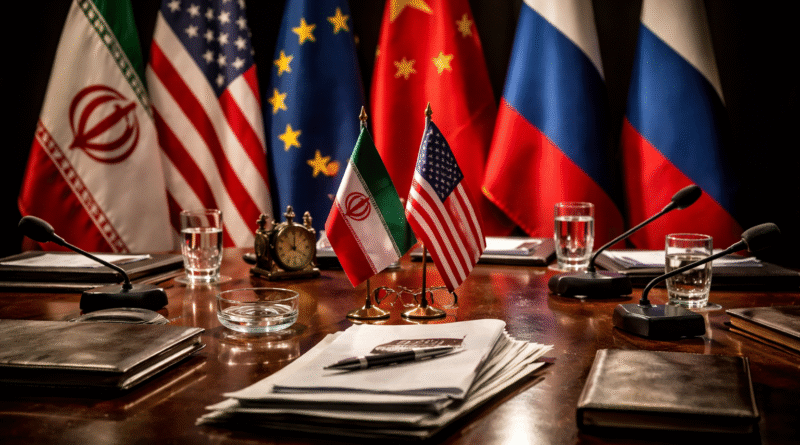
In 2015, the Joint Comprehensive Plan of Action, widely known as the Iran Nuclear Deal, was signed between Iran and the P5+1 group. This included the United States, United Kingdom, France, Russia, China, and Germany.
Western governments believed Iran could be moving toward nuclear weapons capability. Iran denied this. Tehran maintained that its programme was meant for civilian nuclear energy.
The agreement introduced strict inspections. It limited uranium enrichment. It created monitoring systems. These were verification mechanisms, not trust-based promises.
Iran wanted sanctions relief. The global community wanted to avoid a nuclear arms race in West Asia. Neither side got everything it wanted. But both reduced immediate risks.
The Iran Nuclear Deal reflected practical diplomacy. It accepted a simple reality. Knowledge cannot be erased. Capabilities can only be managed. For a while, the deal brought stability and reopened economic engagement with Iran.
The Trump Administration: Withdrawal and Maximum Pressure
In 2018, President Donald Trump withdrew the United States from the Iran Nuclear Deal. He argued that the agreement did not adequately protect American interests.
This decision created tension with European allies. It weakened the coordinated international approach.
A strategy of maximum pressure followed. Sanctions were tightened. Later, in 2025, military strikes targeted Iranian nuclear and air defence facilities, reportedly with Israeli support.
Yet something interesting happened. Despite pressure and escalation, negotiations slowly resurfaced around reviving the Iran Nuclear Deal. This revealed a hard truth. Military action can destroy facilities. It cannot erase technical knowledge or geopolitical relevance.
Even after confrontation, diplomacy returned. That tells its own story. Force has limits. Political bargaining remains unavoidable in international relations.
Israel’s Security Concerns
For Israel, Iran’s nuclear ambitions are not an abstract policy issue. They are seen as an existential threat.
Prime Minister Benjamin Netanyahu has consistently argued that Iran must never reach a nuclear threshold. Israeli intelligence assessments have shaped U.S. debates, especially on the risk of weaponisation linked to the future of the Iran Nuclear Deal.
Israel prefers permanent prevention over temporary containment. From its perspective, even a small window of vulnerability is too dangerous.
This difference highlights a broader reality. The United States balances global commitments. Israel focuses on immediate survival. Alliances matter, but national security priorities are not always identical.
The Gulf States and the Fear of War
The Gulf states share rivalry with Iran. But they fear escalation even more.
Their economies depend heavily on trade routes, oil exports, and investor confidence. A major conflict in the Persian Gulf would disrupt shipping lanes and energy markets. The consequences would be severe.
For them, stability matters more than symbolic victory. Even a tense peace is better than open war.
Iran, on its part, has signalled retaliatory capacity. This includes potential strikes on U.S. military bases in the region. The possibility of wider confrontation creates deep anxiety.
Uncertainty increases risk. When leadership decisions become unpredictable, the danger of miscalculation rises. That is why most regional actors prioritise de-escalation over the collapse of diplomatic efforts such as the Iran Nuclear Deal.
India’s Strategic Interests
For India, Iran is not just another country in West Asia. It has real strategic value.
Iran was once a major supplier of crude oil to India. Energy security remains a key concern. Any disruption linked to tensions over the Iran Nuclear Deal affects domestic prices and economic stability.
The Chabahar Port project is equally significant. It provides India access to Afghanistan and Central Asia without relying on Pakistan. That connectivity matters.
Iran’s ties with Pakistan, its engagement with the Taliban, and its role in Central Asian politics shape India’s broader strategic environment.
Sanctions disrupted trade and slowed cooperation. A diplomatic resolution and revival of the Iran Nuclear Deal would benefit India economically and geopolitically. Stability in Iran supports regional balance.
Domestic Politics Inside Iran
Internal politics in Iran play a crucial role in shaping negotiations around the Iran Nuclear Deal.
Economic pressure, public protests, and factional rivalry all influence decision-making. External attacks often strengthen conservative forces. Nationalism rises. Reformist voices lose space.
This creates a paradox. Military pressure aims to force compliance. But it can instead unify domestic opinion against external threats.
Political legitimacy becomes linked to resistance. Under such conditions, compromise becomes harder.
Successful negotiations require more than external incentives. They require internal political space. Leaders must be able to justify engagement without appearing weak.
Conclusion
The Iran nuclear issue, centred around the Iran Nuclear Deal, shows a recurring pattern in global politics. Confrontation often returns to negotiation.
Agreements like the Iran Nuclear Deal are imperfect. They do not solve everything. But they reduce immediate risk more effectively than prolonged conflict.
For regional states, the stakes are survival and economic stability. For global powers, the issue touches credibility and strategic balance. For India, it concerns energy security, connectivity, and regional access.
The larger lesson is clear. Sustainable security requires persistent diplomacy. The alternatives include escalation, retaliation, and potentially a wider regional war. And those costs are far higher and far more unpredictable.
Sometimes diplomacy feels slow and frustrating. But history shows it remains the only path that prevents crises from spiralling out of control.
The Analysis Desk at ThirdPol analyses political and economic developments in Iran and their wider impact on West Asian geopolitics.