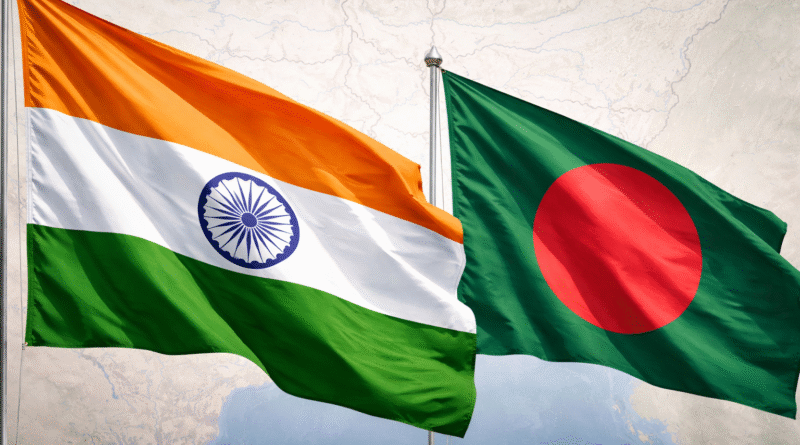
India Bangladesh Relations: Why Strategic Patience Matters Now
For years, India thought that continued engagement with Bangladesh would lead to stability. Open borders, transit access, medical cooperation, and development aid aimed to build trust and shared interests. With the ouster of Sheikh Hasina, this assumption is now under pressure, and India Bangladesh relations have entered a phase of uncertainty.
Bangladesh is undergoing a huge political and cultural shift. Since the caretaker Yunus government took over, attacks on minorities spiked and religious intolerance have become more common. These incidents are not isolated. They indicate a deeper change in political messaging, where criticism of India is increasingly seen as politically useful. New Delhi’s concern is not only moral or ideological; it is also strategic.
When Engagement Loses Its Leverage
For over a decade, India opted for restraint. Even when elections in Bangladesh raised concerns or minority rights seemed threatened, New Delhi remained engaged. The idea was simple. Cooperation would encourage moderation over time. That idea no longer applies to the current state of India Bangladesh relations.
When hostility toward India becomes a tool for domestic mobilisation and a signal to external partners, engagement stops fostering stability. Instead, it creates imbalance. India continues to provide access and goodwill, while political players in Dhaka gain by opposing it. At this point, continued engagement risks being seen as weakness rather than diplomacy.
The China and Pakistan Factor
Bangladesh’s growing ties with China now extend well beyond trade. Infrastructure projects, port development, and defence partnerships are on the rise. Meanwhile, Dhaka’s warming relationship with Pakistan carries historical significance. These developments are not merely diplomatic changes; they reshape the power equation in the region.
For India, the implications are clear. The eastern border and the northeastern states are vulnerable to the impact of these shifts. When calls for cutting India’s Chicken’s neck or challenging maritime interests enter mainstream conversations, silence loses its neutrality. It carries a strategic cost for India Bangladesh relations.
Why Containment Matters
Containment should not be mistaken for hostility. It is a recalibration. Measures like tightening land borders, pausing discretionary aid, limiting transit and medical access, or restricting airspace are not punishments. They are ways to establish boundaries.
Access to logistics, healthcare, and transit is not guaranteed. It relies on mutual restraint. If Bangladesh asserts its sovereignty while continuing to enjoy uneven access, the burden falls solely on India. Containment helps restore balance between what is said and what is real.
The Value of Quiet Strength
Public outrage and moral lectures often backfire. Hostile narratives thrive on visible reactions. A careful and procedural approach takes away their power. Quiet actions often communicate more effectively than loud statements.
Formal diplomacy should continue, but from a measured distance. Courtesy should not imply closeness. Precision should come without emotion. This consistency sends a stronger message than televised anger ever could. India cannot dictate Bangladesh’s internal politics, nor does it need to. What is essential is that sustained hostility has real consequences for India Bangladesh relations.
A Step Back, Not a Breakdown
Containment is not the same as abandonment. The doors remain unlocked, but they are not wide open anymore. Cooperation becomes conditional instead of automatic. This preserves leverage while avoiding escalation.
South Asia’s histories are closely linked. Instability crosses borders, and extremism builds on precedent. In this context, strategic patience backed by firm boundaries is not a sign of weakness. It is a sensible approach. India cannot afford to be emotionally reactive or strategically stalled. If engagement now brings more risk than reward, a calm and deliberate step back is not retreat. It is responsible statecraft.
The Analysis Desk at ThirdPol writes on India’s foreign policy, regional security, and shifts shaping South Asia.
Pingback: Indian Foreign Policy in 2025: A Year of Strategic Stress
Pingback: India–Bangladesh Relations: History, Cooperation and Challenges
Pingback: India Bangladesh Relations 2026: Is the Reset Real?